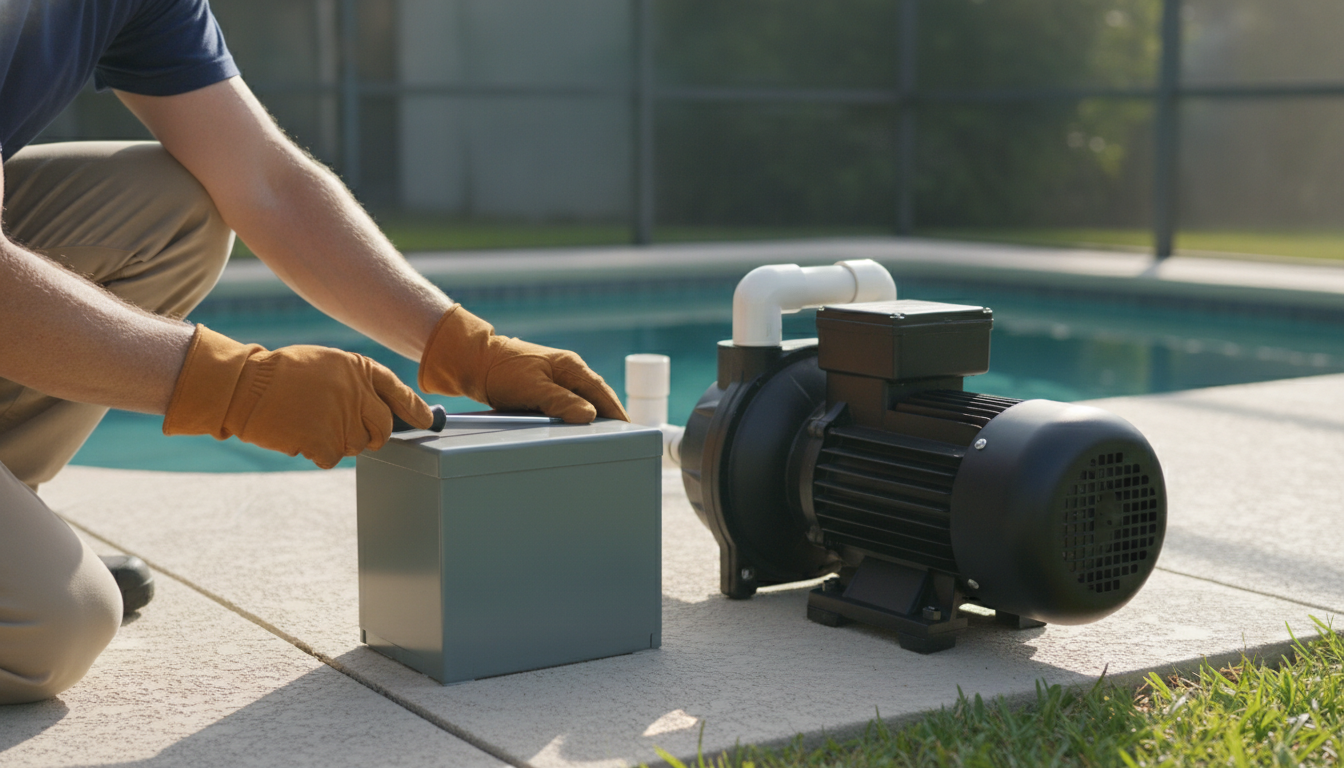
If your pool pump keeps tripping, leave it off after a recurring trip and identify the exact device that opened from a dry, safe location. A conventional overcurrent breaker, GFCI receptacle, GFCI breaker, and dual-function breaker do different jobs. The device label and model matter more than the presence of a test button.
Do not remove a panel cover or touch wet or visibly damaged equipment. If you see smoke or fire, leave the hazard area and contact emergency services.
Which device opened?
Start with what you can read without opening electrical equipment. Note the device label, any indicator light or trip message, and whether the device is at a receptacle, controller, disconnect, or panel.
| Device | What it does | What the trip does not prove |
|---|---|---|
| Conventional circuit breaker | Protects the circuit from overcurrent | Whether the cause is in the pump, wiring, connections, or breaker |
| GFCI receptacle or device | Detects a current imbalance associated with a ground fault | That the GFCI itself has failed |
| GFCI circuit breaker | Combines overcurrent and ground-fault protection | Which protection function caused the trip unless the device identifies it |
| AFCI or dual-function breaker | Provides the functions stated on its label | That every test button indicates GFCI protection |
A GFCI receptacle does not provide overcurrent protection by itself. A GFCI circuit breaker combines both functions. A properly connected upstream GFCI can also protect a downstream receptacle that has no test and reset buttons of its own.
This site’s published position, from the pool electrical bonding guide, is that any outlet supplying a single-phase pool pump motor from 120 volts through 240 volts requires GFCI protection, at any amperage, whether the pump is plugged into a receptacle or wired directly. The older exemptions based on horsepower or amp rating are gone.
The CPSC GFCI fact sheet explains the difference between grounding, ground-fault protection, and overcurrent protection. Our Florida GFCI guide covers the same distinction in more detail.
What does the trip pattern tell you?
The pattern helps a qualified professional choose where to begin testing, but it does not diagnose the fault by itself.
It trips as soon as the pump starts
Record whether the trip happens when the pump, controller, or another pool component starts. An immediate trip can narrow the inspection, but it does not establish whether the problem is inside the equipment or on the circuit side.
Leave the device off after a recurring trip. Repeated resets can re-energize a fault without resolving it.
It trips after the pump has been running
Write down how long the equipment ran and which components were operating. A delayed trip is useful information, but timing alone does not prove an overload, a heat problem, or a failing motor.
Our breaker troubleshooting guide explains how overload, short-circuit, ground-fault, and arc-fault conditions differ. The actual device and circuit still need to be tested before anyone names the cause.
It trips after rain or irrigation
A rain-related pattern makes moisture in the motor windings, a degraded seal, and corroded connections reasonable inspection targets. It is not proof that water caused the trip or that the fault is inside the pump.
From a dry location, note whether the trip followed rain, irrigation, flooding, or a wet equipment pad. Do not approach the pad to test equipment while it is wet. A qualified professional can separate a pump-equipment problem from a fault in the GFCI protection, connections, or branch circuit.
It seems to happen only in summer
Record the time of day, equipment schedule, weather, and how long the pump had been operating. Seasonal timing can help reproduce the problem, but it does not identify the failed component or justify replacing a breaker without testing.
Why shouldn’t you bypass the GFCI?
A GFCI is intended to reduce shock risk when current takes an unintended path. A trip around pool equipment deserves inspection because water and electricity share the same work area.
Do not replace GFCI protection with an unprotected device, install a larger breaker to stop trips, or assume the protective device is defective. The correct repair starts by determining whether the problem is in the protective device, field wiring, connections, controller, or pump equipment.
The applicable protection and installation requirements depend on the actual equipment, wiring method, property jurisdiction, and work being performed. A generic article cannot verify those details for a particular pool. Our pool electrical bonding guide explains how bonding, grounding, and GFCI protection address different hazards.
Should you call a pool company or an electrician?
Use the part of the system involved to route the first visit.
| What you can safely observe | Appropriate first call |
|---|---|
| A breaker, GFCI, disconnect, branch circuit, or field connection appears involved | A licensed electrical contractor |
| The pump or controller reports an equipment-specific problem without signs of electrical distress | A qualified pool service provider may assess the equipment |
| The fault could be inside the pump or on the supply circuit | Either professional may need to coordinate after the initial assessment |
| There is heat, discoloration, buzzing, crackling, a burning odor, or a shock | Keep away and request prompt qualified electrical inspection |
Do not open the motor, controller, disconnect, or panel to decide which trade is responsible. Equipment testing and circuit testing may both be necessary when the fault crosses that boundary.
Tampa Electrical Pro is a referral service. We connect homeowners with independent licensed and insured electricians who can evaluate the electrical side of the problem. The selected contractor determines the work scope, scheduling, permits, and price.
What changes the repair scope?
Pool pump trips do not have one standard repair because the same symptom can begin in different parts of the system. Useful scope questions include:
- Which exact device opened and what functions are listed on its label
- Whether the pump is plugged in, hardwired, or controlled through other equipment
- Whether the fault appears inside the pool equipment or along the branch circuit
- Whether accessible connections show moisture or corrosion during a qualified inspection
- Whether the problem requires focused device testing or tracing the circuit route
- Whether existing equipment is being repaired or the wiring and protection are being changed
- What the pump, controller, and protective-device instructions require
- Whether the property authority requires a permit or inspection for the selected work
A focused device-side diagnosis is different from tracing a branch-circuit fault or coordinating an equipment repair with electrical work. The contractor needs the equipment labeling, observed trip pattern, access conditions, and test results before defining the repair.
For circuit-side work, see the electrical repair service and GFCI outlet installation service.
Does the repair require a permit?
That depends on the property’s actual jurisdiction and the work selected after diagnosis. Testing existing equipment is not the same scope as changing a breaker, protective device, branch circuit, disconnect, or field wiring.
The selected contractor should identify the authority for the property and confirm the applicable process before permit-dependent work begins. A Tampa mailing address alone should not be used to guess which department has jurisdiction.
What should you note before calling?
Collect only what you can observe without opening equipment or entering a wet or damaged area:
- The exact label and model shown on the device that opened
- Whether it is a conventional breaker, GFCI, AFCI, or dual-function device
- Whether the trip happened at startup or after the equipment had run
- Which pump, controller, heater, light, or other pool equipment was operating
- Whether rain, irrigation, an outage, or visible water preceded the trip
- Any indicator light, display message, odor, sound, heat, or discoloration
- Whether this was the first trip or a recurring pattern
Do not repeatedly reset the device to collect more observations. If it trips again, leave it off for the inspection.
Call (813) 850-0320 to be connected with a licensed and insured electrician for the circuit side of the problem. Emergency electrical service is available for conditions that need urgent professional attention.
Frequently asked questions
Can I replace the breaker to stop the tripping?
Not based on the trip alone. The breaker may be responding correctly to a fault elsewhere. A qualified electrician should test the protective device, circuit, connections, and connected equipment before deciding what needs replacement.
Is a GFCI trip different from a conventional breaker trip?
Yes. A conventional breaker provides overcurrent protection. A GFCI detects a current imbalance associated with a ground fault. A GFCI breaker can provide both functions, so read the device label instead of relying only on the test button.
Why does the pool pump trip after rain?
The timing makes moisture in the windings, a degraded seal, or corroded connections relevant inspection targets, but it does not prove any of them caused the trip. Note the conditions from a safe, dry location and leave wet equipment alone.
Why does it trip only after running for a while?
Delayed timing helps distinguish the pattern from an immediate startup trip, but it does not name the cause. Record the operating time and connected equipment so the electrician can reproduce and test the condition.
Can a plain receptacle have GFCI protection?
It can be protected by a properly connected upstream GFCI device. The absence of test and reset buttons at one receptacle does not establish that the circuit has no GFCI protection.
Should I call the pool company or an electrician first?
Call an electrician when the breaker, GFCI, disconnect, branch circuit, or field wiring appears involved. A pool service provider may assess equipment-specific problems. Some faults require coordination between both professionals.