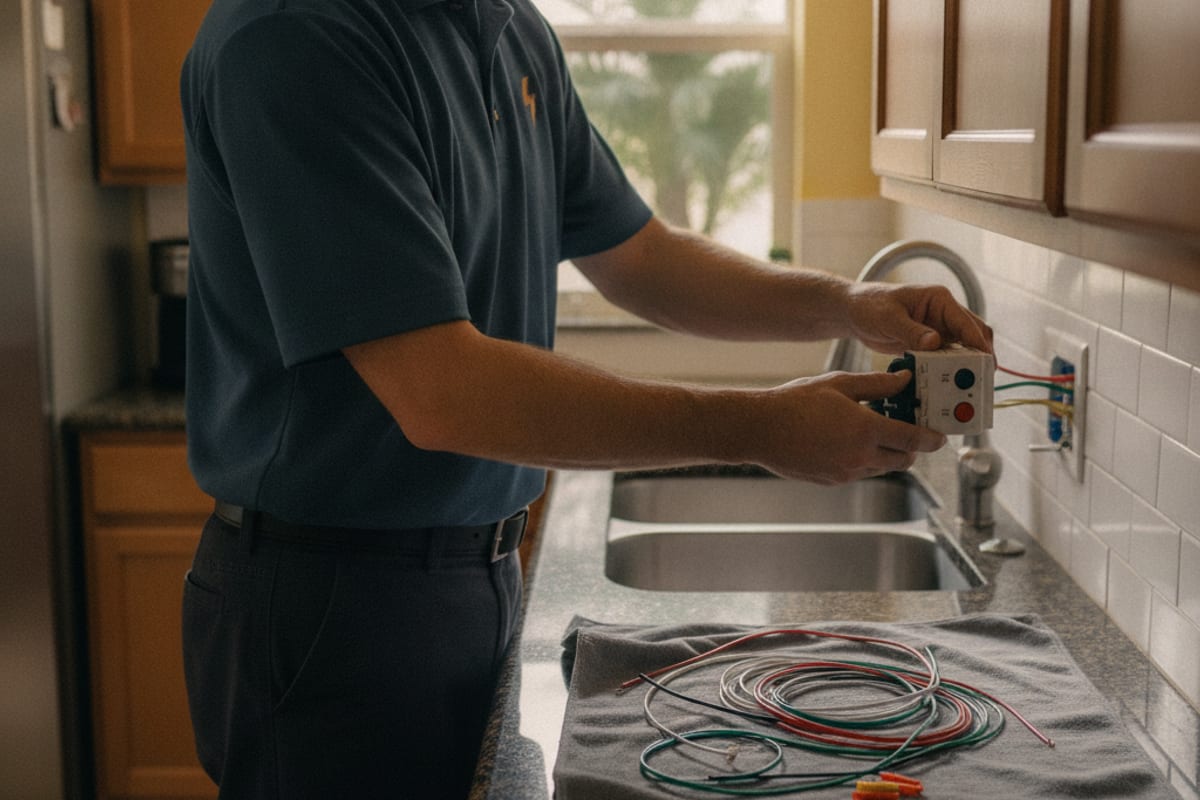
This site’s published range is $100 to $175 for a straightforward per-outlet swap, and $400 to $900 for a whole-home update of the usual wet locations. Those figures are not a quote. The cost of GFCI outlet installation still depends on what the electrician finds at the location. Replacing an accessible device on a sound circuit is different from adding a new receptacle, correcting damaged wiring, tracing downstream outlets, or installing equipment exposed to rain or moisture.
Tampa Electrical Pro refers homeowners across Hillsborough, Pinellas, and Pasco County to independent licensed and insured electricians. The selected contractor determines the scope, price, permit needs, and scheduling after evaluating the property.
What changes the installation scope?
The most useful cost comparison starts with the work required, not a flat per-outlet figure. An electrician may need to determine:
- Whether this is a device replacement, a new receptacle, or a new circuit
- Whether one GFCI device can protect properly connected downstream receptacles
- Whether the box, conductors, and connections are in suitable condition
- Whether the circuit has an equipment grounding conductor
- Whether the location is indoors, damp, wet, or directly exposed to weather
- Whether breaker-level protection is compatible with the panel and circuit
- Whether another fault must be corrected before the new device can operate properly
- Which permitting authority has jurisdiction over the property
These distinctions explain why two projects involving the same number of outlets can have different scopes.
GFCI protection and grounding are different
A GFCI detects an imbalance in current and helps protect people from ground-fault shock. It can provide that protection on a circuit without an equipment grounding conductor, but installing a GFCI does not create a ground.
The CPSC GFCI fact sheet explains that a GFCI can work with older two-slot receptacle wiring and that a receptacle-type device can protect properly connected outlets downstream. When no equipment ground is present, the replacement requires the appropriate labeling. An electrician should identify the circuit arrangement and explain whether adding grounded wiring is a separate improvement worth considering.
Receptacle protection versus breaker protection
A GFCI receptacle can protect itself and properly connected downstream receptacles. A GFCI breaker protects the circuit from the panel and also provides overcurrent protection. A receptacle-type GFCI does not replace the circuit breaker’s overcurrent function.
Breaker-level protection can be useful when several locations share a circuit, but it is not automatically the lower-cost choice. Panel compatibility, circuit layout, access, shared loads, and troubleshooting needs all affect the decision. If a device trips, reset access also matters. A breaker in the panel and a receptacle near the point of use create different day-to-day experiences.
Does an ungrounded outlet make the project larger?
It can, depending on the goal. Adding GFCI protection to an ungrounded circuit is not the same project as installing a new equipment grounding path or replacing older wiring.
If the purpose is shock protection at an existing location, an electrician can evaluate the permitted GFCI replacement method and required labeling. If the property owner also wants grounded wiring for equipment needs, that additional work may involve a different route, more access, or a new circuit. The contractor should separate those scopes so the proposal makes clear what is and is not being changed.
Where might GFCI protection apply?
The exact requirement depends on the location, receptacle, circuit, exceptions, and code adopted by the authority with jurisdiction. A licensed reprint of 2020 NEC 210.8(A) covers qualifying residential receptacles in locations such as bathrooms, specified garage and accessory areas, outdoors, crawl spaces at or below grade, basements, kitchens, laundry areas, boathouses, and indoor damp or wet locations. It separately addresses kitchen countertop-serving receptacles and receptacles within the stated distance of sinks, bathtubs, and showers.
That list is not a do-it-yourself installation checklist. Specific voltage conditions and exceptions apply, and pool, spa, dock, and similar equipment can fall under separate requirements.
Jurisdiction also matters. For example, Largo publishes the 2023 Florida Building Code and 2020 NEC among its current codes, while other Tampa Bay properties may fall under a county or different city authority. The electrician should confirm the property’s jurisdiction and the project-specific requirements.
Is GFCI the same as AFCI protection?
No. GFCI protection responds to ground faults that can create a shock hazard. AFCI protection responds to conditions associated with electrical arcing. Overcurrent protection addresses overloads and short circuits.
A project may involve one or more of these functions, but the devices are not interchangeable. Before comparing proposals, ask which protection is being added, where it will be located, and whether the quoted work includes correcting any existing circuit problem.
Why outdoor and waterfront work can differ
A protected porch, an exposed exterior wall, pool equipment, and dock wiring do not present the same conditions. The electrician must match the equipment to the actual exposure and its listing. Damp-rated and wet-rated equipment are not interchangeable, and a roof overhead does not by itself establish that water cannot reach a device.
Existing corrosion, damaged covers, unsuitable boxes, difficult routing, or repairs to the circuit can expand the scope beyond a simple receptacle replacement. Our guide to corroded outdoor outlets explains warning signs and why damaged equipment needs qualified evaluation. Related landscape and dock lighting work should be described separately so each circuit and exposure condition can be assessed.
Do not handle, open, or test electrical equipment that is wet, damaged, hot, discolored, buzzing, crackling, or producing a burning odor. Those conditions call for prompt inspection by a qualified electrician. If there is smoke or fire, leave the hazard area and contact emergency services.
Does a property inspection determine the work required?
An inspection may identify missing protection, a nonworking device, improper labeling, or another concern. It does not mean every outlet in an older property automatically requires replacement under the newest provisions.
The next step is to identify the affected locations, determine how the circuits are connected, and confirm which rules apply to the particular project. For a broader explanation of protected locations and jurisdictional limits, see our Florida GFCI code guide.
Questions to ask when comparing proposals
A useful proposal should make the scope clear. Ask:
- Is this a direct replacement, new wiring, or a new circuit?
- Will one device protect downstream receptacles, and which ones?
- Does the circuit have an equipment grounding conductor?
- If it does not, is grounded wiring included or priced separately?
- Is the proposed device suitable for the location’s actual exposure?
- Does the work include troubleshooting or correcting damaged wiring?
- Is breaker-level or receptacle-level protection being proposed, and why?
- Does the applicable jurisdiction require a permit or inspection for this scope?
Those answers make contractor proposals easier to compare even when the final prices differ.
Testing after installation
Follow the device manufacturer’s testing instructions. The CPSC advises testing GFCI protection monthly and after a power outage. If the device will not test or reset normally, leave it alone and arrange qualified evaluation rather than repeatedly resetting it. Never test wet or visibly damaged equipment.
Get the scope checked
Call Tampa Electrical Pro at (813) 850-0320 to be referred to an independent electrician who can inspect the affected circuit and explain the available options. The selected contractor will provide the project price and determine whether repairs, new wiring, or permitting are part of the work. You can also review the site’s GFCI outlet installation service before calling.