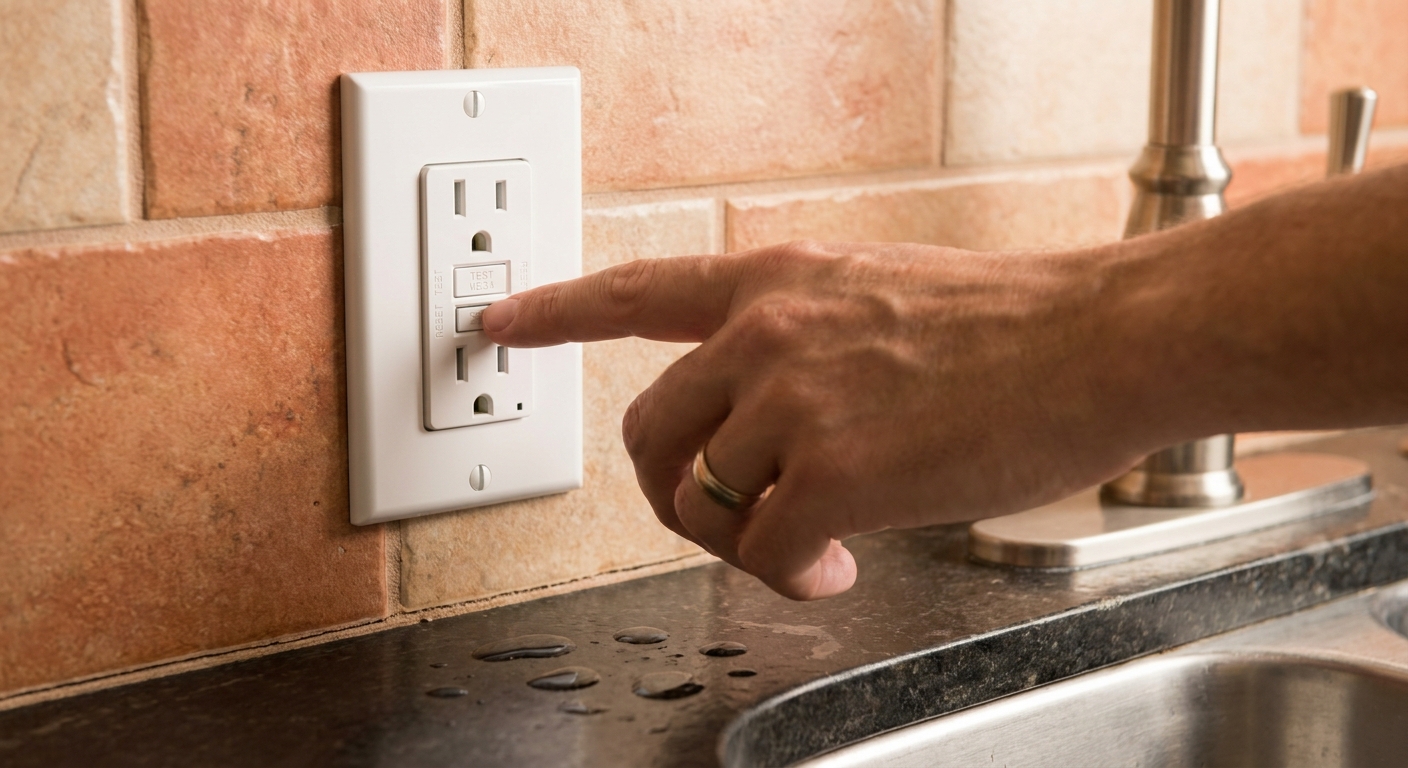
A GFCI trips when it detects an imbalance in the electricity traveling through the circuit. Moisture, a damaged appliance or cord, deteriorated wiring, a downstream fault, or a failed GFCI can cause that imbalance.
If the device and surrounding area are dry and show no signs of damage, unplug accessible appliances and try one reset according to the manufacturer’s instructions. If it trips again immediately, won’t reset, or shows heat or damage, leave it alone and arrange an inspection.
For a dry, undamaged device, a TEST check is meaningful only if pressing TEST actually cuts power to a plugged-in load. A button that clicks while power stays on means the device failed. Do not attempt this check on equipment that is wet, hot, damaged, or showing other warning signs.
| Pattern | What it can point toward | Safe next step |
|---|---|---|
| Trips with nothing plugged in | A downstream receptacle, damaged wiring, moisture, or a failed GFCI | Leave it off after one reset and arrange inspection |
| Trips on one appliance | That appliance, its cord, or an internal fault | Leave that appliance unplugged |
| Trips after rain | Water at an outdoor cover, enclosure, cord, or connected equipment | Stay away from wet equipment |
Why does a GFCI trip when nothing is plugged in?
A GFCI compares the current traveling through the hot and neutral conductors. If some current takes another path, the device opens the circuit to reduce the risk of a ground-fault shock. The CPSC’s GFCI guidance explains that this protection is different from equipment grounding and overcurrent protection.
The receptacle with the test and reset buttons may protect other properly connected outlets farther along the circuit. A wet exterior receptacle, damaged cord, garage appliance, or bathroom device can therefore trip a GFCI in another location. Unplugging items from the visible GFCI alone may not isolate every connected load.
A damaged downstream cable or unintended contact between neutral and ground on the protected side can also cause a trip. Finding those conditions requires circuit testing, not opening boxes or removing covers yourself.
The GFCI itself may have failed. If its mechanism won’t latch after the safe checks above, professional GFCI outlet installation may be part of the repair. The circuit still needs testing before a replacement is chosen.
How can I narrow down the cause safely?
Do not touch or test an outlet that is wet, scorched, loose, cracked, buzzing, hot, or producing an odor. Keep people away from the area and contact a qualified electrician. If there is smoke or fire, leave the hazard area and call emergency services.
When the outlet and surrounding area are dry and undamaged, you can check accessible plug-in loads without removing a cover:
- Unplug appliances connected to the GFCI and nearby outlets that have lost power.
- Follow the device manufacturer’s instructions and try one reset.
- If the GFCI holds, reconnect ordinary, visibly undamaged appliances one at a time.
- Stop if connecting one appliance causes another trip, and leave that appliance unplugged.
- If the empty circuit trips again or the device won’t reset, leave it off and arrange an inspection.
Remember loads that are easy to overlook, including outdoor lighting, garage equipment, countertop appliances, and devices stored under a sink. Some appliances continue drawing power when their controls appear to be off.
Do not move a suspected appliance to an outlet without GFCI protection. That removes the warning without repairing the fault. Do not repeatedly press reset buttons or keep resetting a breaker that opens again.
A GFCI may also be upstream from plain receptacles without test and reset buttons. That downstream protection does not create an equipment-grounding conductor, and a GFCI receptacle by itself does not provide breaker-style overcurrent protection.
Can rain make a GFCI keep tripping?
Rain and wind-driven water can reach damaged exterior covers, loose enclosures, landscape fixtures, cords, or equipment that isn’t suited to its exposure. An indoor GFCI may then trip because it protects an outdoor receptacle farther along the circuit.
Moisture can remain after the rain stops, so a device that resets later may trip again during another wet period. Timing alone doesn’t identify where the water entered or prove that moisture is the only fault.
Our guide to corroded outdoor outlets in Tampa explains visible warning signs. Rust, green residue, discoloration, a broken cover, or a loose receptacle calls for qualified inspection.
Leave storm-exposed equipment unplugged. Do not use a heater or hair dryer on an outlet. If water reached a receptacle or electrical box, do not touch or test it.
When should I stop resetting the GFCI?
Stop after one immediate repeat trip with accessible loads disconnected. Repeated resets do not remove moisture, repair insulation, or correct a downstream wiring fault.
Heat, buzzing, crackling, sparks, shocks, a burning odor, melted plastic, or dark marks call for prompt qualified inspection. Do not remove a cover, reach into electrical equipment, or approach a wet or visibly damaged panel.
If the outage affects refrigeration, medical equipment, or another essential load, use the applicable safety or backup plan while arranging help. Do not run a permanent workaround through an extension cord or bypass the GFCI.
Tampa Electrical Pro is a referral service that matches homeowners across Hillsborough, Pinellas, and Pasco counties with independent licensed and insured electricians. The selected contractor determines scheduling, testing, and repair scope. Help is available for electrical troubleshooting and repair.
What will an electrician check?
An electrician can identify the outlets and equipment protected by the GFCI, including connected receptacles in another room or outside the home.
Testing can separate an appliance fault from GFCI failure, moisture intrusion, or wiring leakage. Depending on the observed problem, the electrician may inspect downstream connections, exterior covers, neutral wiring, cable insulation, incoming power, and whether the installed device suits the location and circuit.
If water entered the equipment, correcting the entry point matters. Replacing the GFCI without addressing a damaged cover, enclosure, or connected device can leave the underlying problem unresolved.
Frequently asked questions
Why does my GFCI trip as soon as I reset it?
The fault may still be present. Possible causes include a connected appliance, downstream moisture, damaged wiring, unintended neutral-to-ground contact, or a failed GFCI. Disconnect accessible loads once, then stop if the device trips again.
Can a bad appliance trip a GFCI outlet?
Yes. A damaged cord, heating element, motor, or internal component can allow current to take an unintended path. If connecting one appliance causes the trip, leave it unplugged and have it repaired or replaced.
Can rain cause an indoor GFCI to trip?
Yes. An indoor GFCI may protect exterior receptacles farther along the same circuit. Water entering an outdoor box or connected device can therefore trip a GFCI in a garage, bathroom, or another indoor location.
Is the GFCI bad if the reset button won’t stay in?
Not necessarily. Some devices won’t reset without incoming power, and an active downstream fault can keep others from latching. A failed internal mechanism is another possibility. Testing is needed to distinguish among them.
Should I replace a tripping GFCI with a regular outlet?
No. A standard receptacle would remove the GFCI’s protective function without correcting the fault. Any repair should preserve the protection appropriate for the circuit and location.
For help with a GFCI that keeps tripping, call Tampa Electrical Pro at (813) 850-0320.