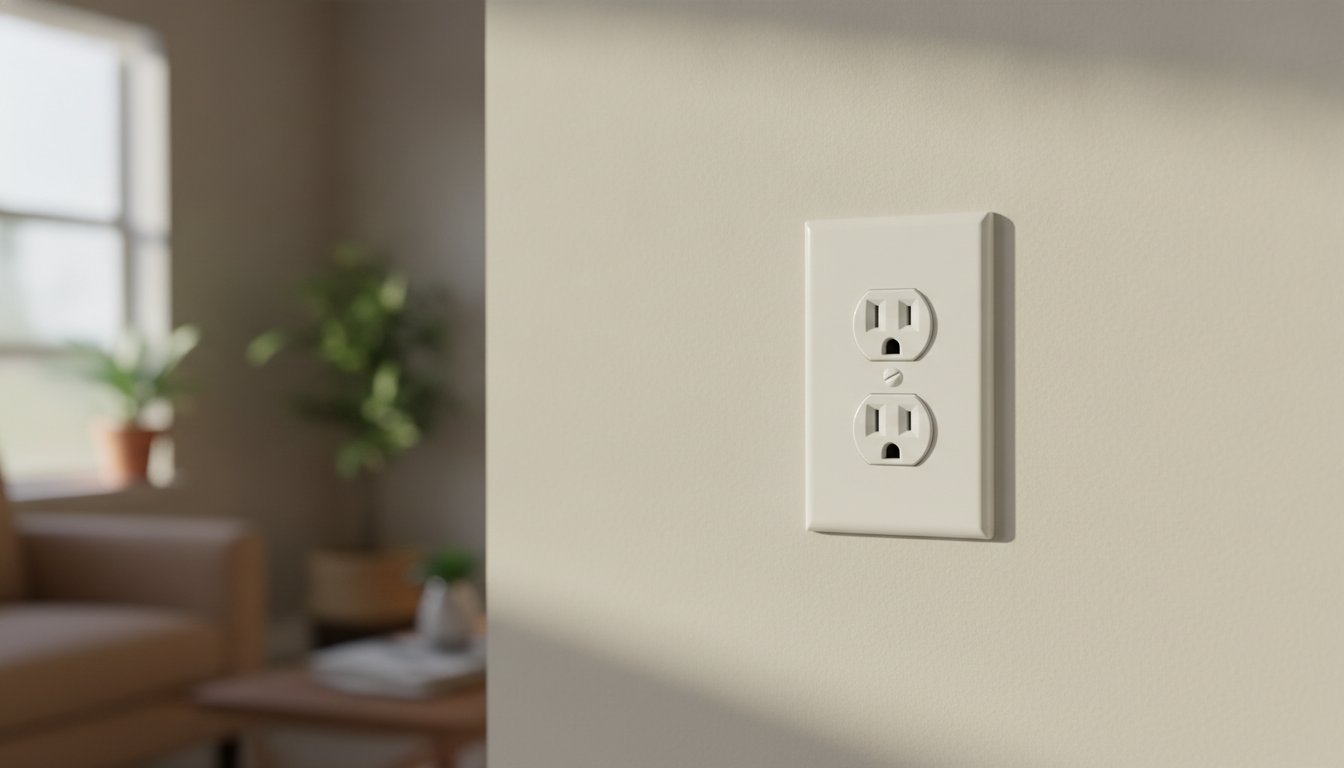
When an outlet sparks as you plug something in, a single brief flash can occur while the plug contacts connect with an energized circuit. Repeated, large, or lingering sparks need attention. Stop using the outlet if you also notice heat, a burning odor, smoke, buzzing, damaged plastic, or scorch marks. Color alone can’t tell you whether the connection is safe.
What does a spark during plug-in mean?
A quick spark can appear before the plug blades are fully seated. Current begins flowing as the metal contacts meet, which can create a momentary flash near the outlet face.
The appliance can affect what you see. Some devices draw more current when first connected, making that initial contact more noticeable. That possibility doesn’t explain every spark or prove that an outlet is safe.
The pattern provides more useful information than color alone:
| What you notice | What may be involved | What to do |
|---|---|---|
| One brief flash during insertion | Contact forming as the appliance receives power | Watch for other warning signs and avoid using a damaged or loose connection |
| Sparking with several different plugs | A worn, loose, or damaged receptacle may be involved | Stop using the outlet and arrange an inspection |
| Sparking with only one appliance | The plug, cord, or appliance may be involved | Leave that appliance unplugged |
| Repeated or lingering sparks | The connection isn’t behaving normally | Stop using the outlet and arrange an electrical diagnostic |
| Heat, odor, buzzing, or scorch marks | Heat or connection damage may be present | Keep clear and seek prompt electrical help |
| Smoke or fire | An active electrical hazard may be present | Leave the hazard area and contact emergency services |
Our broader outlet warning-sign checklist covers loose plugs, discoloration, buzzing, and lost power.
Can a small spark be normal?
A brief spark can sometimes appear at the moment a plug makes contact. It shouldn’t continue while the plug is being inserted, occur during normal use, or be treated as harmless when other warning signs are present.
Check the overall condition without removing the cover or reaching into the outlet box. A receptacle that no longer holds plugs securely, feels warm, smells burned, buzzes, or shows discoloration needs professional attention.
Don’t keep plugging the device in to recreate the spark. Repeated testing doesn’t provide a reliable diagnosis and keeps energizing a questionable connection.
The appliance can help narrow the inspection. Sparking associated with one plug or cord points to a different possible source than several appliances sparking at the same outlet. A qualified electrician can evaluate the receptacle, wiring, circuit protection, and appliance connection without relying on the spark’s appearance alone.
What can make a sparking outlet dangerous?
Frequent or sustained sparking can occur when electricity crosses an unstable or damaged connection. Possible causes include:
- Receptacle contacts that no longer grip the plug securely
- A loose or damaged terminal connection behind the outlet
- Damaged plug blades or an appliance cord
- Moisture or corrosion in or around the outlet assembly
- Heat damage to the receptacle, box, or nearby wiring
- A problem elsewhere on the branch circuit
The visible outlet face doesn’t reveal the condition of the connections inside the box. Replacing a cover plate also doesn’t repair a worn receptacle or damaged wiring.
If other outlets or rooms lose power at the same time, the issue may extend beyond the receptacle that sparked. Leave the affected devices unused and arrange an inspection rather than assuming one outlet explains the full outage. Our guide to partial power loss in a house describes other possible parts of the electrical system that may need evaluation.
What Tampa conditions can affect an outlet?
Location and exposure matter more than a neighborhood name or the age of a house alone.
Outdoor and semi-outdoor receptacles may be exposed to rain, moisture, salt, debris, or damaged covers. An electrician can inspect the device rating, enclosure, cover, drainage, terminals, and surrounding materials. Our guide to corroded outdoor outlets in Tampa explains the distinctions among outdoor devices and covers.
Older wiring also requires an inspection based on what is actually present. A property’s construction date doesn’t establish that it contains aluminum branch wiring. If aluminum branch wiring is found, the electrician needs to identify the affected connections and determine an appropriate qualified repair method. The presence of one material or panel brand still doesn’t diagnose why a particular outlet sparked.
What should I do right now?
Stop using the outlet when sparking is repeated, large, or lingering, or when the receptacle is loose or damaged. Don’t reconnect the appliance simply to see whether the spark happens again.
Use these precautions:
- Leave the outlet and affected appliance unused.
- Don’t touch the outlet if it’s hot, smoking, wet, visibly damaged, or surrounded by damaged material.
- If the breaker is safely accessible and the panel isn’t wet or damaged, switch off the affected circuit.
- Don’t approach or operate a wet, damaged, arcing, or smoking electrical panel.
- Keep the appliance unplugged until its plug and cord have been checked.
- Arrange an electrical repair diagnostic for the outlet and circuit.
If you see smoke or fire, leave the hazard area and contact emergency services. Don’t remain near the outlet to operate electrical equipment.
A breaker trip doesn’t identify or repair the underlying problem. Don’t repeatedly reset a breaker that trips again. Restoring power can re-energize a damaged connection.
The emergency electrician referral page can help when sparking accompanies heat, heavy scorching, buzzing, or a burning odor and there is no active fire requiring emergency services.
What may be checked during an electrical diagnostic?
The appropriate repair depends on the source of the problem. An electrician may need to evaluate:
- Whether the receptacle securely holds the plug
- The outlet’s terminals and nearby conductors
- The box condition and available space
- Heat, corrosion, moisture, or damaged insulation
- The appliance plug and cord
- GFCI or AFCI protection associated with the circuit
- Upstream devices or connections if other locations are affected
A straightforward receptacle replacement differs from repairing damaged conductors, correcting an unsuitable box, tracing an upstream fault, or addressing moisture intrusion. Access, circuit condition, device type, location, and the extent of any heat damage all affect the work.
What protection may apply when an outlet is replaced?
A replacement receptacle may need additional protection depending on the circuit and location. NEC 406.4(D) addresses requirements that can include:
- GFCI protection where 406.4(D)(3) applies
- AFCI protection where 406.4(D)(4) applies
- Tamper-resistant construction where 406.4(D)(5) applies
- Weather-resistant construction where 406.4(D)(6) applies
The AFCI rule in NEC 210.12(A) applies to branch circuits supplying newly installed 120-volt, 15- and 20-amp outlets or devices in specified dwelling areas. Those areas include kitchens, laundry areas, family rooms, dining rooms, living rooms, parlors, libraries, dens, bedrooms, sunrooms, recreation rooms, closets, hallways, and similar rooms or areas. The rule also addresses extensions and modifications to branch circuits in those areas.
For replacement receptacles in locations covered by the AFCI requirement, NEC 406.4(D)(4) carries that protection into the replacement. Compliance methods can include a listed outlet branch-circuit-type AFCI receptacle, protection from a listed upstream AFCI receptacle, or protection from a listed combination-type AFCI circuit breaker.
These provisions don’t create a blanket statement that every untouched outlet in every home must be retrofitted. The circuit, work being performed, room, exposure, and applicable requirements determine the replacement. If GFCI protection applies, see our GFCI outlet installation service.
Frequently asked questions
Why does my outlet spark with only one appliance?
The appliance plug, cord, or internal components may be involved, but that pattern doesn’t rule out an outlet problem. Keep the appliance unplugged until both sides of the connection are checked. Don’t test it repeatedly in other outlets.
Can a brief spark be normal?
A brief spark can occur as the plug contacts connect. Repeated, large, or lingering sparks are different. Heat, odor, buzzing, smoke, loose contact, or visible damage also changes the response. Color by itself can’t confirm that an outlet is safe.
Why did the outlet spark and stop working?
A breaker, GFCI device, failed receptacle, damaged connection, or another upstream issue may have interrupted power. Leave the outlet unused until the cause is identified. Don’t repeatedly reset a breaker or GFCI that trips again.
Should I turn off the breaker after an outlet sparks?
If the breaker is safely accessible and the panel is dry and undamaged, switching off the affected circuit can keep the questionable connection de-energized. Don’t approach a wet, damaged, arcing, or smoking panel. For smoke or fire, leave the area and contact emergency services.
Does a replacement outlet need AFCI or GFCI protection?
It depends on the circuit, location, and work being performed. Replacement receptacles must meet AFCI, GFCI, tamper-resistant, and weather-resistant requirements where the applicable provisions call for them.
What affects the repair scope?
The scope changes depending on whether the problem is limited to a worn receptacle or involves damaged wiring, a failed protective device, moisture, the appliance connection, or an upstream circuit fault. Box access, device type, location, and visible heat damage also matter.
Get help with a sparking outlet in Tampa
Tampa Electrical Pro is a referral service that connects homeowners with independent licensed and insured electricians. The selected electrician determines the diagnosis, work scope, scheduling, and price.
Call (813) 850-0320 to request help with a sparking outlet in the Tampa Bay area.