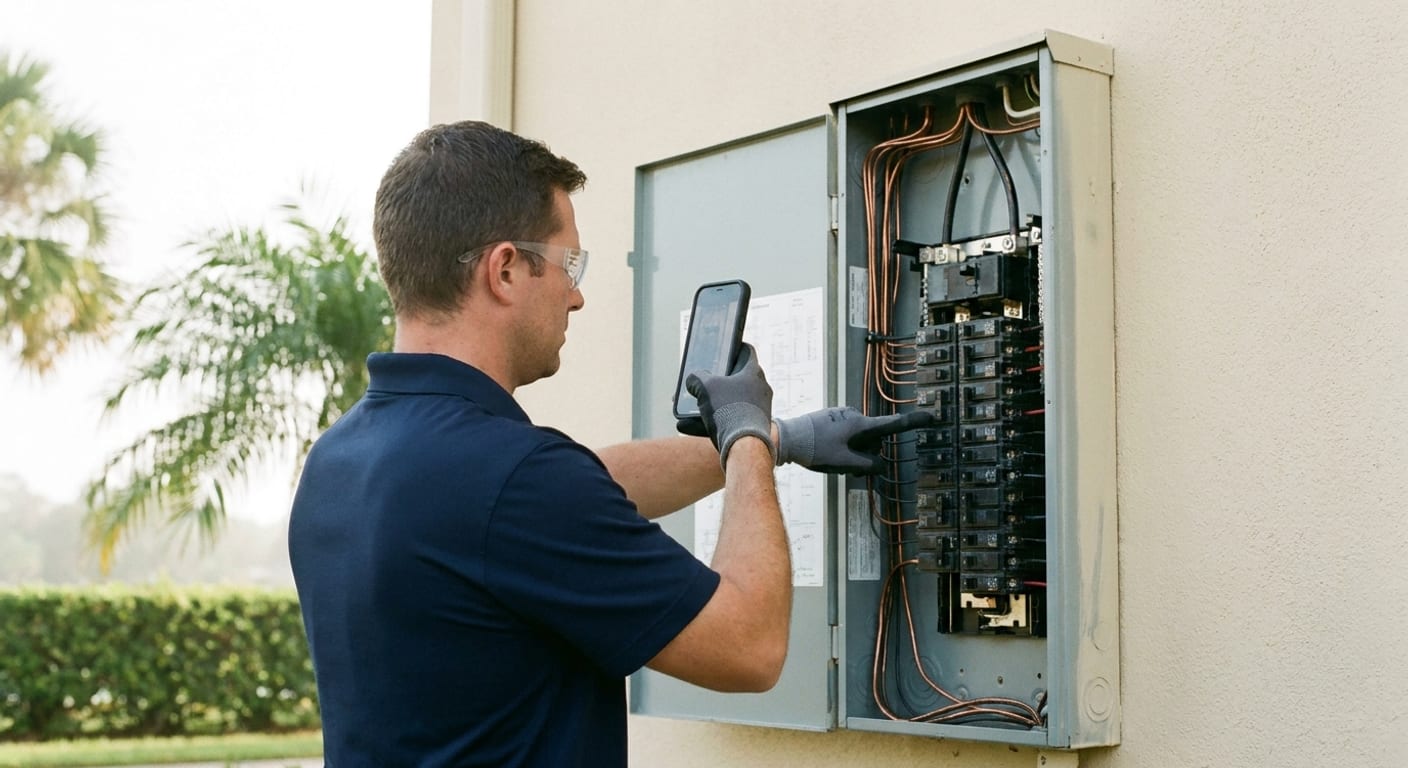
To troubleshoot an electrical circuit, identify everything without power, unplug connected devices, and reset the circuit’s protection once. Stop immediately if you notice heat, burning odors, buzzing, moisture, damaged wiring, or repeated tripping.
What should I check before resetting anything?
Start by determining how much of the home lost power. Check nearby lights, outlets, and permanently connected equipment without removing covers. This helps distinguish a problem with one device from an outage affecting one circuit or a larger part of the electrical system.
If the entire home is dark, check the utility’s outage information before checking breakers. You can also see whether nearby properties have power from a safe location. Partial power, especially when it affects several circuits or causes lights to brighten and dim, needs professional attention.
Before approaching a breaker or outlet, look and listen for warning signs. Don’t touch equipment that appears scorched or damaged, gives off heat or a burned odor, or makes crackling or buzzing sounds. Keep away from equipment exposed to rain, plumbing leaks, or standing water.
How do I narrow down what caused the circuit failure?
Unplug lamps, chargers, portable appliances, and power strips from the affected area. Turn wall switches off. Inspect each accessible plug and cord for discoloration, melted insulation, loose blades, or physical damage without opening electrical equipment.
A simple process helps isolate the problem:
- Confirm which lights, outlets, and appliances have stopped working.
- Unplug every portable device connected to the affected area.
- Check the electrical panel for a breaker sitting between its normal positions.
- Check nearby GFCI receptacles for a tripped reset button.
- Attempt one reset, then reconnect devices individually if power remains on.
If power fails after one particular device is reconnected, leave that device unplugged. The appliance, its cord, or the load it adds may be involved. If the circuit fails with everything unplugged, the problem may involve a receptacle, switch, connection, breaker, or concealed wiring.
How do I reset a tripped breaker safely?
Stand on a dry floor with dry hands. Open only the panel door that provides access to the breaker handles. Never remove the secured cover surrounding the wiring.
Find the breaker that appears out of line with the others. Move it fully to the off position, then return it firmly to the on position. Some breakers won’t reset unless they’re switched completely off first.
If it trips again, leave it off. Repeated resets can energize a damaged circuit and worsen overheating. Our guide to a breaker that keeps tripping explains the common causes and warning signs.
Never remove the panel cover or touch exposed conductors. Testing inside an electrical panel belongs to a licensed electrician with the appropriate equipment.
Could a GFCI outlet shut off other outlets?
Yes. One tripped GFCI receptacle can interrupt power to downstream outlets. The controlling device may be in a garage, bathroom, kitchen, laundry area, or exterior location rather than the room where the outage appeared.
Unplug devices from the affected outlets, then attempt one reset using the GFCI’s reset button. If it won’t reset, confirm that the circuit breaker is on only when the panel is dry, undamaged, and safe to approach. A GFCI may refuse to reset when it has no incoming power or detects a continuing fault.
Stop if the device appears heat-damaged or corroded, gives off heat or an odor, or trips again. Outdoor exposure and water intrusion can affect receptacles. A licensed electrician can determine whether GFCI outlet installation or replacement is appropriate.
What does the troubleshooting result tell me?
If the circuit stays on with everything unplugged, reconnect portable devices individually and pause after each one. A trip that follows a specific appliance suggests that the appliance, its cord, or the load it adds needs further evaluation.
If a breaker trips only when several devices operate together, the combined load may be more than the circuit can support. Moving portable equipment to another outlet helps only when that outlet is on a different suitable circuit. Extension cords aren’t a permanent answer.
If only one outlet remains dead while others work, that receptacle may be damaged or supplied through another protective device. A failed connection elsewhere can also interrupt downstream power. Don’t pull the outlet from its box to inspect wiring.
Flickering, intermittent power, or a breaker that won’t stay reset needs professional diagnosis. A licensed electrician matched through our referral service can test the circuit and identify the failed component through residential electrical repair.
When should I stop troubleshooting?
Stop if you hear buzzing or arcing, smell burned material, see smoke, notice signs of heat, or find blackened plastic. Turn off the affected breaker only if you can reach it without approaching smoke, water, or damaged equipment. Leave the hazard area and contact emergency services if there’s active smoke or fire.
Stop when water has reached an outlet, panel, switch, or connected appliance. Don’t step into standing water or approach wet electrical equipment.
Arrange a qualified inspection when the breaker trips with everything unplugged, a GFCI won’t reset, lights brighten and dim unexpectedly, or several unrelated circuits behave strangely. Those symptoms can involve concealed connections or service equipment that homeowners shouldn’t test.
Frequently asked questions
Can a breaker look on even when it has tripped?
Yes. A tripped breaker can rest near the middle and appear almost on. Move it fully off before attempting one reset.
Why does only half of an outlet work?
A switched receptacle may intentionally control one half, but internal damage is also possible. Check the wall switches, then stop using the outlet if it’s loose, discolored, unreliable, or shows signs of heat.
Why did my circuit lose power without tripping a breaker?
A tripped GFCI, failed receptacle, damaged switch, connection problem, or utility issue can interrupt power without an obvious breaker trip. Professional testing can determine where the interruption occurs.
Can I replace the breaker to solve the problem?
Not without diagnosing why the circuit failed. Replacing a breaker won’t correct damaged wiring, overloaded conditions, failed connections, or ground faults.
Is it safe to keep resetting a circuit?
No. Attempt one reset after unplugging connected devices. If the protection trips again, leave the circuit off and arrange a professional inspection.
For help diagnosing a circuit in Hillsborough, Pinellas, or Pasco County, call Tampa Electrical Pro at (813) 850-0320 to be matched with a licensed electrician.