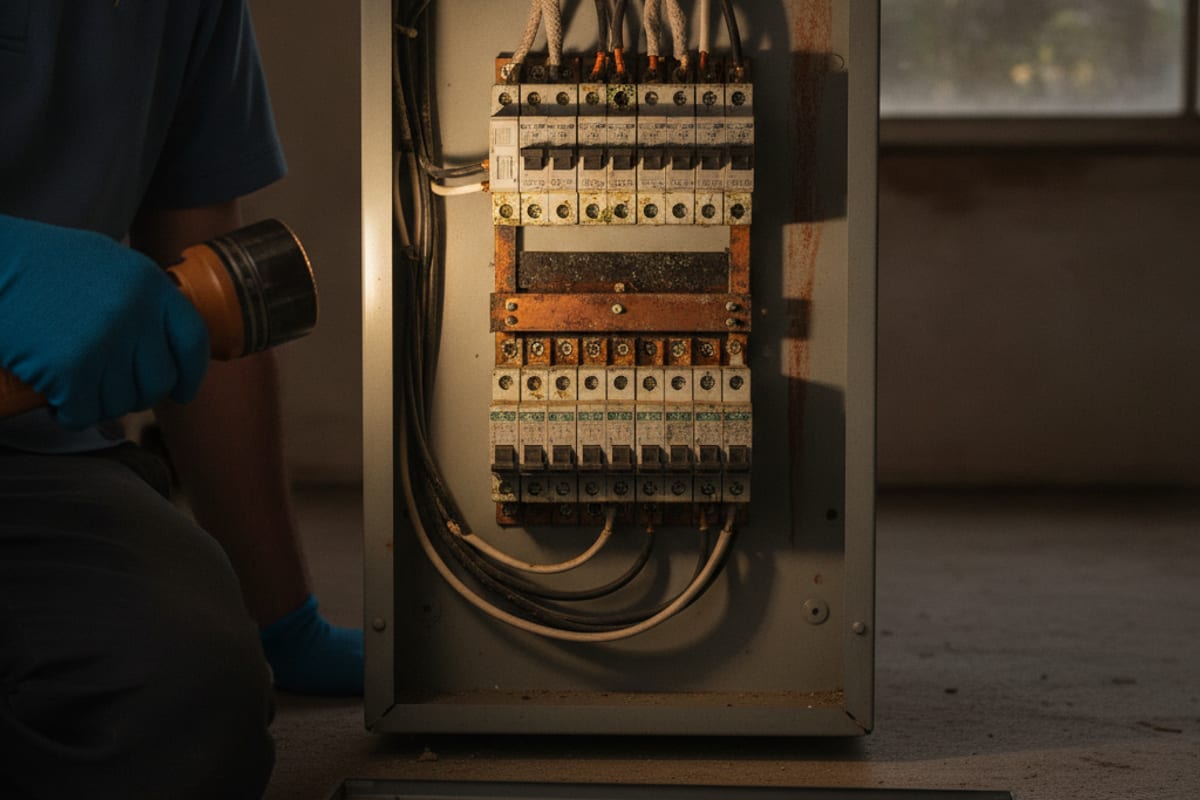
An electrical panel should be evaluated when it shows heat damage, unusual sounds, recurring breaker trips, or other signs that something isn’t working correctly. It may also need review before adding a large electrical load, even when every existing circuit appears to work normally.
The right recommendation depends on the equipment and the home’s actual loads. Some properties need a repair, a new circuit, or more circuit spaces. Others need panel replacement or a service-capacity change. A qualified electrician should separate those issues instead of recommending an upgrade based only on the property’s age or the number printed on the panel.
Signs that call for prompt attention
Unexplained flickering or dimming, frequent breaker trips, buzzing or crackling, shocks, a burning odor, and hot or discolored plates all call for prompt inspection by a qualified electrician. These symptoms can have different causes, and a general description can’t identify the fault safely.
If there is smoke or fire, leave the hazard area and contact emergency services. Don’t remove the panel cover, touch wet or damaged electrical equipment, or keep resetting a breaker that trips again.
A single trip after several appliances were used may suggest an overloaded circuit, but it can also involve a fault or equipment problem. Note which devices were operating and where the symptom occurred. That information helps the electrician investigate without treating the timing as a diagnosis.
What an electrician should evaluate
A useful panel assessment looks at more than whether the breaker spaces are full. The electrician may review:
- The panel and service-equipment ratings
- Breaker and connection condition
- Signs of overheating, corrosion, or physical damage
- Existing circuit use and the loads the property needs to support
- Available breaker spaces and whether the equipment permits the proposed arrangement
- Grounding and bonding at the applicable points in the system
- The service conductors and other equipment affected by the proposed work
- Labels, model information, and previous alterations that can be verified at the property
The panel door may provide helpful manufacturer and rating information, but don’t remove an interior cover to find it. A photograph of an accessible exterior label can help when arranging an evaluation.
Service capacity, circuit space, and panel condition
These are related but different questions.
Service capacity concerns how much electrical load the service can support. A load calculation and the proposed equipment matter when evaluating a new large circuit.
Circuit space concerns whether the panel has an approved place for another breaker. A panel can have open spaces without having enough capacity for a proposed load. It can also lack convenient spaces while the service still has capacity.
Panel condition concerns whether the installed equipment and connections remain suitable for use. Damage or incompatible components may require correction even when the calculated load is modest.
A subpanel can provide additional circuit spaces, but it doesn’t increase the property’s utility service capacity. Likewise, replacing a panel doesn’t automatically reduce electrical consumption or lower the power bill.
Can another circuit be added?
Sometimes. Adding a circuit isn’t automatically unsafe or automatically possible. The decision depends on the intended load, the existing service and feeder capacity, available or approved circuit arrangements, equipment labeling, and the route for the new wiring.
For a large new load, an electrician may need to perform a load calculation before sizing the circuit or recommending service work. The presence of full breaker spaces alone doesn’t prove that the utility service must be upgraded.
What shapes the work scope
There is no supported standard Seffner price or one-size-fits-all schedule for panel work. The scope changes depending on what the inspection finds. Relevant factors can include:
- Repairing a particular circuit versus replacing the panel
- Keeping the existing service capacity versus changing it
- Condition and compatibility of the existing equipment
- Accessibility and routing for new conductors
- Coordination required for safe utility isolation
- Permit and inspection requirements for the property’s jurisdiction
- Other equipment that must be corrected as part of the approved scope
For properties handled by Hillsborough County, electrical alterations and replacements generally aren’t listed as exempt work. The selected contractor should determine the correct permit path for the actual address and project.
Insurance, lending, and property transactions
An insurer, lender, buyer, or inspector may ask for information about a panel, but their requests aren’t interchangeable. Ask for the concern in writing, including the equipment or condition being questioned and the documentation required.
A brand name, property age, or real-estate transaction doesn’t by itself establish the necessary correction. An electrician can document the installed equipment and observed condition so the appropriate party can make its own coverage or lending decision. Tampa Electrical Pro doesn’t promise an insurance outcome.
Getting help with a Seffner panel
Tampa Electrical Pro is a referral service. We connect Seffner customers with independent licensed and insured electricians who evaluate the property and determine the appropriate scope. Scheduling, permits, workmanship, and pricing are handled by the selected contractor.
Call (813) 850-0320 to request help with recurring trips, visible damage, a planned new load, or questions about an existing panel. You can also review the site’s panel upgrade service information before calling.
Common questions
Does a full panel mean I need a service upgrade?
No. Full breaker spaces identify a space issue, not the service’s available capacity. An electrician should review the actual loads, equipment labeling, and permitted options. A subpanel may provide spaces, but it doesn’t add service capacity.
Does flickering prove the panel is undersized?
No. Flickering or dimming can have more than one cause. Because it can accompany a serious connection or equipment problem, unexplained or recurring flicker should receive prompt qualified inspection rather than a remote diagnosis.
Can an electrician replace one damaged component instead?
Possibly. The answer depends on the component, the condition of the surrounding equipment, compatibility, and the underlying cause. An inspection should determine whether a focused repair is appropriate or whether broader replacement is necessary.
Will a new panel lower my electric bill?
Not by itself. A panel distributes electricity and provides overcurrent protection. Energy use depends on the equipment and how it operates.