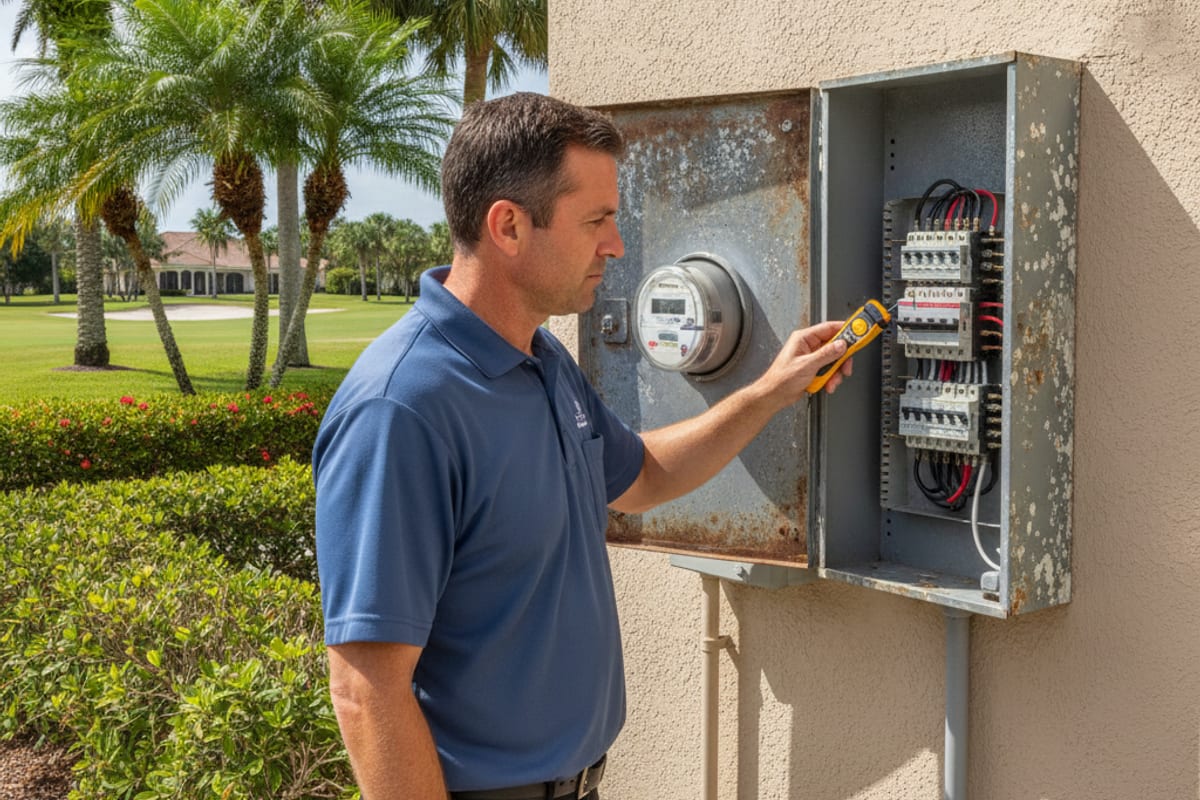
The electrical panel on a Palm Harbor home sits at the heart of the electrical system, and when something goes wrong with it, homeowners need clarity on what’s happening and what the repair really involves. Not every problem means replacing the whole panel. Understanding what repair work looks like helps you make decisions about your home’s safety and your electrical budget.
When a panel needs repair
A panel needs attention when specific warning signs appear. Repeated breaker trips, even when only one or two appliances are running, can indicate a problem with an individual breaker or a circuit load issue. Burning smells or visible corrosion on the outside of the equipment are serious warning signs. Flickering lights throughout multiple rooms at once, rather than in just one outlet, often points to something at the main panel level. Buzzing or crackling sounds from inside the panel, or plates on the outside that feel hot, are red flags that require immediate professional evaluation. These symptoms often warrant an emergency electrician call rather than waiting for regular business hours.
Salt air and Florida humidity in Palm Harbor create a corrosive environment. Panels exposed to this coastal weather can develop connection issues, corrosion on the bus bar where breakers mount, or corrosion inside the box even when the exterior looks relatively clean. An electrician inspecting the panel can identify whether the issue is isolated to one breaker, one connection, or something broader affecting the whole system.
Repair versus replacement
This is where many homeowners feel uncertain, and it’s a fair question. Repair work might mean replacing a single breaker that’s failed, tightening connections at the service entrance, or addressing a specific failed component. Replacement means the entire panel assembly comes out and a new one goes in, which is a broader and more expensive project.
A qualified electrician evaluates the specific condition and loads on your panel to recommend the right scope. If your panel is relatively modern, has available breaker spaces, and the only problem is a single failed breaker or a corroded connection, repair is the logical choice. If the panel itself is old, has a known history of failures (like Federal Pacific or Zinsco panels), or if the internal components show widespread corrosion or damage, replacement may be the only safe option.
The key distinction is that repair addresses what’s actually wrong, without replacing functional components. Replacement is necessary when the equipment itself can’t be trusted to operate safely.
What repair work involves
A typical panel repair might start with confirming which breaker or connection is causing the issue. An electrician using diagnostic testing can often pinpoint the failure before opening anything. Once confirmed, the breaker or connection is addressed.
Replacing a single breaker involves turning off the main disconnect, unbolting the bad breaker from the bus bar, unbolting and removing the wire connected to it, installing the new breaker in its place, and reconnecting the wire. This is straightforward when the breaker slots and connections are accessible and undamaged.
Corroded connections at the main service lugs, where the power company’s service lines connect to your home’s equipment, require careful disconnection, cleaning, and reconnection. This sometimes involves service-company coordination depending on your utility agreement, but in many cases the electrician can handle it if the meter is inside the home and the lugs aren’t under active load.
Corrosion on the internal bus bar or contacts is not a cleaning job. Cleaning does not reverse pitting, material loss, heat damage, or a compromised connection. A qualified electrician should determine whether the affected parts can remain in service or the panel needs replacement. See what electrical panel bus bar replacement really costs for that call.
All of this work requires the panel to be safely deenergized or isolated before the electrician removes any internal components. That’s why only a qualified professional should attempt this work, and why the process takes careful time rather than rushed speed.
Coast-specific concerns in Palm Harbor
Salt air corrosion is a real factor for panels on or near Palm Harbor’s coast. The combination of humidity and salt spray accelerates oxidation on exposed metal, including breaker contacts, connection points inside the panel, and the internal bus bar where breakers attach. Regular inspection of the exterior panel surface can catch early corrosion before it affects the internal components.
Storm season also matters. If a panel was partially flooded during a heavy rain or hurricane, seawater or saltwater spray contamination inside the box can cause failures weeks or months later as the corrosion spreads. After any coastal storm that involved flooding or spray, have the panel inspected even if it doesn’t show obvious damage.
Humidity inside the box can also contribute to problems over time. Well-sealed panels that have degraded gaskets or openings may allow moisture in. A properly functioning and sealed panel resists this, but older equipment or panels with previous repairs may have compromised seals worth evaluating.
When to call an electrician
As soon as you notice the warning signs, contact a licensed professional. Buzzing, burning smells, hot surfaces, or repeated breaker trips aren’t things to live with or troubleshoot yourself. These are electrical-system red flags. Have a qualified electrician inspect the panel and diagnose the issue. The inspection tells you what’s happening and what needs to happen next.
If you’re planning any significant electrical work, like adding circuits for a new heat pump or upgrading your home’s electrical capacity, the panel should be evaluated as part of that conversation. The electrician needs to know whether your current panel has available capacity and whether the existing equipment is in good condition.
A referral to electrical repair services can get the ball rolling. When you contact an electrician, describe the warning signs you’ve noticed and mention your location in Palm Harbor so they understand the coastal environment and any prior storm events that affected your home.
What about cost
The cost of repair work depends entirely on what’s being repaired. Replacing a single breaker is relatively minor work. Corroded connections or bus-bar damage is more involved and may turn the job into a replacement rather than a repair. The electrician’s quote after inspection will show the specific scope and give you a number you can understand.
If replacement is recommended, that’s a more significant project with a corresponding quote. In either case, the electrician should explain why they’re recommending what they are and what the trade-offs are. If you want a second opinion, you have that right.
FAQ
Can I repair a breaker myself? No. The panel contains live voltage even when the main breaker is off, and the hazard is serious. Leave this work to a licensed professional.
How often should my panel be inspected? There is no published inspection interval that applies to every Palm Harbor panel. After flooding, salt spray, or a storm that reached the equipment, have a qualified electrician inspect it. Warning signs such as heat, buzzing, burning odor, or repeated trips need prompt attention rather than a calendar date.
Is it safe to live in a home while panel repair is being done? Energized parts can remain in the panel even when one circuit is isolated. The electrician sets the isolation plan, including whether any of the house stays on. Do not assume remaining circuits are safe to use until the electrician says so.
What’s the difference between my breaker panel and a subpanel? The main panel is where the utility service enters your home and where the main disconnect is located. A subpanel is secondary equipment that distributes power to a section of the home or a major appliance. Both can have similar issues, and both should be evaluated by a professional.
A Palm Harbor home with electrical panel trouble deserves a qualified inspection. If you’re seeing warning signs, call Tampa Electrical Pro at (813) 850-0320. We’ll connect you with an independent licensed and insured electrician who can inspect the panel and explain whether repair or replacement is the safe path.