Standby and portable generator safety
Portable and fixed standby generators serve different needs, and both require careful planning for isolation, fuel, exhaust, and essential loads.
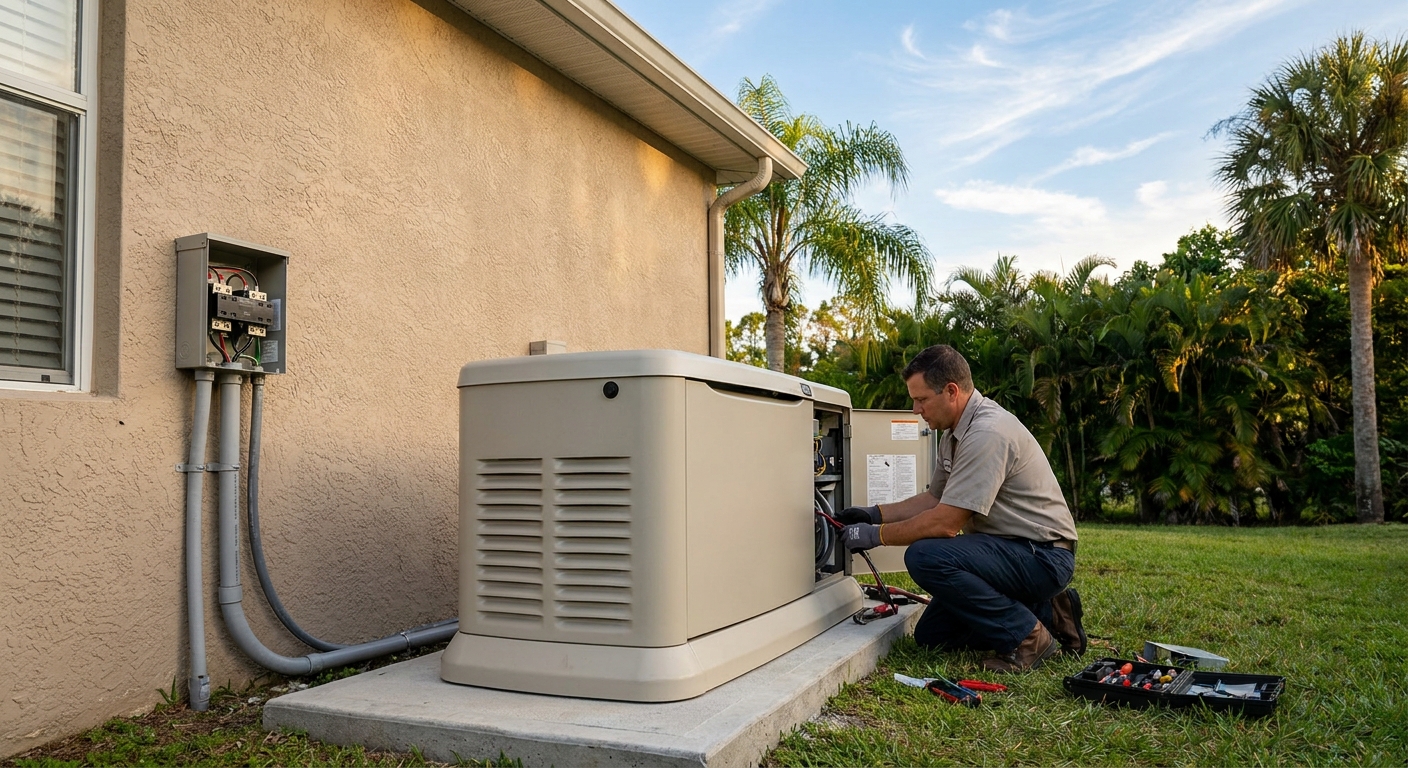
How do portable and standby generators differ?
A portable generator can power individual appliances through properly rated outdoor cords. Connecting one to house wiring requires approved transfer equipment; turning off the main breaker isn't sufficient protection against backfeeding. Fixed standby equipment is professionally installed with transfer isolation from the utility. Both portable and standby generators create combustion exhaust, fire, and electrical hazards.
How should backup loads be selected?
Start with a defined list of essential loads rather than assuming every circuit must run. Equipment starting demands, simultaneous use, fuel supply, and the generator manufacturer's requirements affect selection. A standby generator supplies backup power during an outage, but it doesn't increase the utility service capacity available during normal operation. This site's published installed range for a whole-home generator is $10,000 to $18,000. The selected contractor sets that figure after a load list, transfer equipment, fuel, placement, and site review. Cost factors are covered in whole-house generator cost in Tampa. Hurricane-season planning is covered in whole-home generators for Tampa hurricane season.
What governs fuel and placement?
Portable generators belong outdoors far from the building and away from openings, never in a garage, home, crawlspace, basement, or shed. Fixed standby clearances come from the listed equipment instructions and local review. The selected contractor determines installation scope, permits, fuel coordination, and inspection requirements for the property.
Have a licensed electrician handle the work
We refer you to independent licensed and insured electricians in Tampa Bay.
Keep reading.
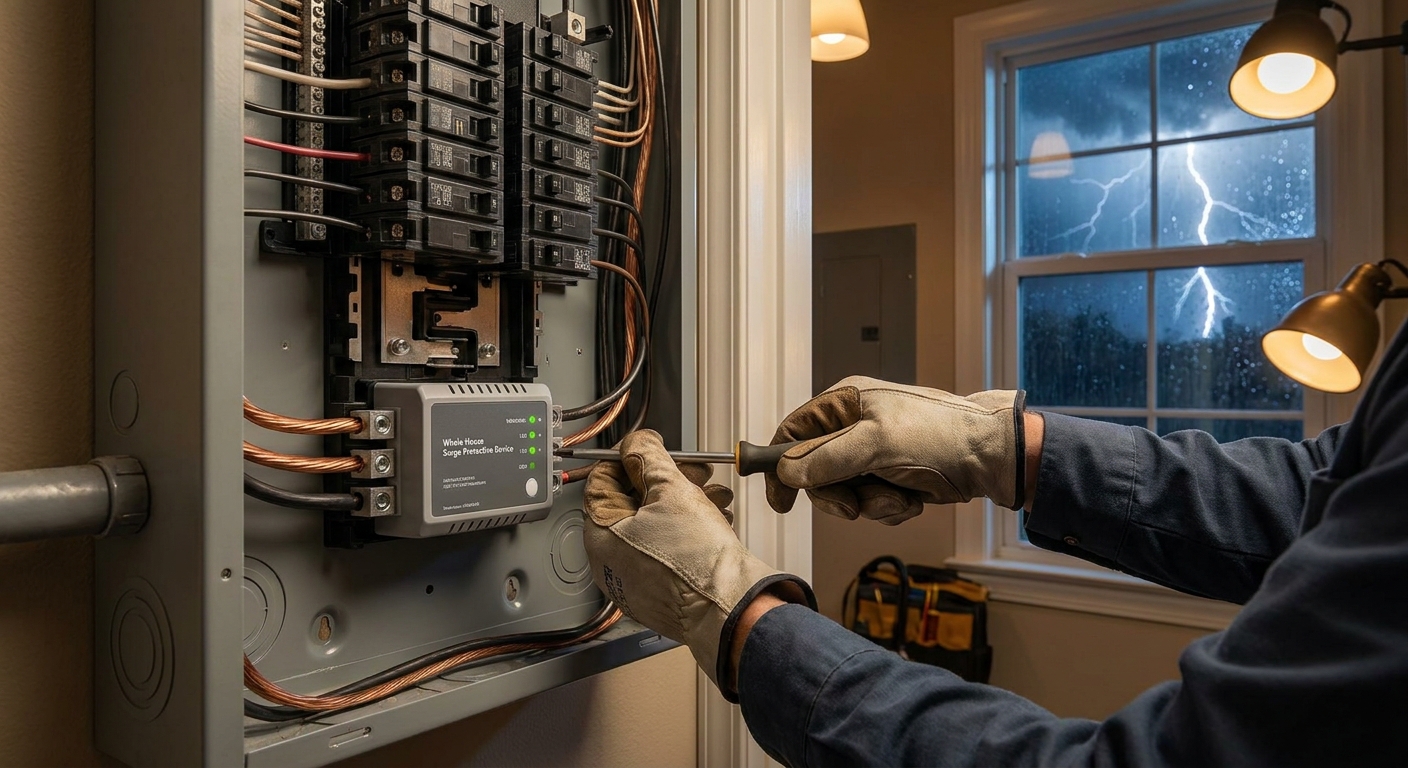
Whole-house surge protection in Tampa Bay
Whole-house surge protection can limit transient voltage before it reaches connected equipment, but device selection must match the electrical system.
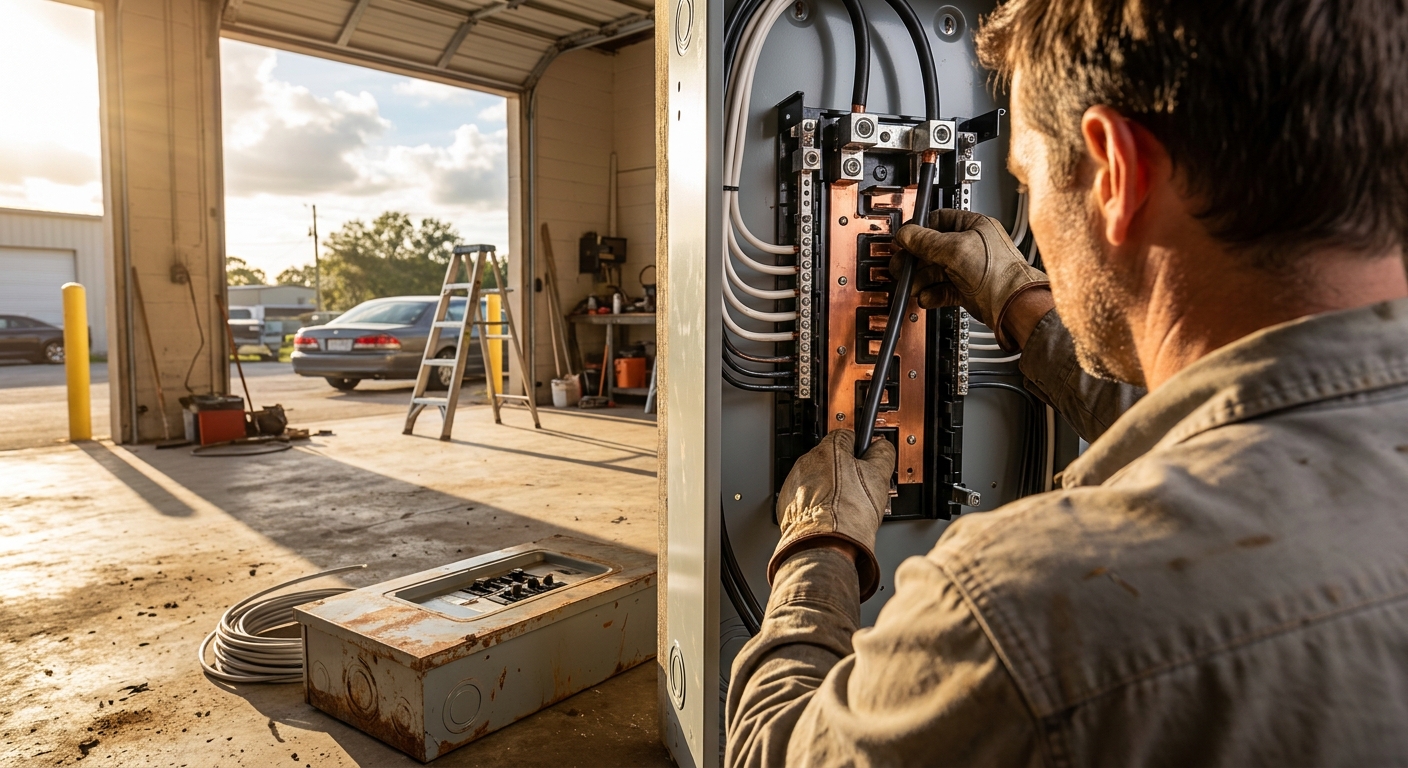
When an electrical panel needs evaluation
Panel evaluation separates service capacity, circuit space, equipment condition, and the needs of any planned electrical loads.
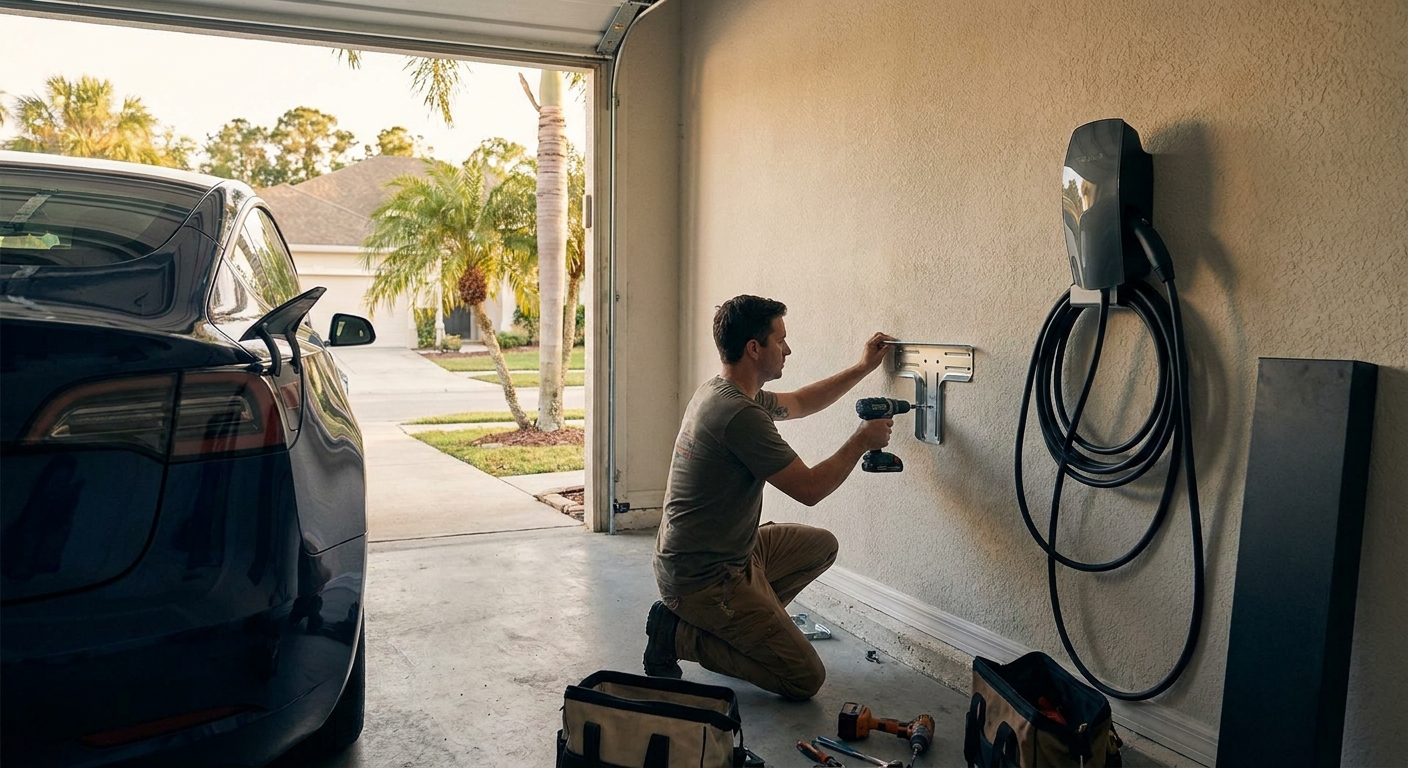
Home EV charging decisions in Tampa
The right home charging setup depends on the vehicle, daily range needs, parked time, installation location, and available electrical capacity.