GFCI and AFCI protection explained
GFCI, AFCI, and overcurrent protection address different hazards. The correct devices and locations depend on the circuit and applicable requirements.

What does GFCI protection do?
A ground-fault circuit interrupter monitors current balance and interrupts power when it detects a ground-fault condition. Protection can be provided at different points on a circuit, so a receptacle without test and reset buttons may still have upstream GFCI protection. A GFCI can work without an equipment grounding conductor, but it doesn't create that grounding path. Florida currently uses the 2020 NEC through the Florida Building Code, 8th Edition (2023). NEC 210.8(A) requires GFCI protection for all 125-volt through 250-volt receptacles in the listed dwelling locations when they are supplied by single-phase branch circuits rated 150 volts or less to ground. Those locations include bathrooms, garages and accessory buildings at or below grade, outdoors, crawl spaces at or below grade, basements including finished basements, kitchen countertop receptacles, receptacles within the specified distance of a sink, boathouses, areas near bathtubs and showers, laundry areas, and indoor damp and wet locations. For dwelling units that rule has no amperage cap. This site's published GFCI range is $100 to $175 per outlet and $400 to $900 for a whole-home update. Location details are covered in GFCI outlets and Florida code.
What does AFCI protection do?
An arc-fault circuit interrupter detects electrical arcing patterns. That role differs from GFCI shock protection and from a breaker or fuse that provides overcurrent protection. Required coverage depends on the circuit, the work being performed, the applicable code, and the authority serving the property. NEC 210.12(A) of the 2020 NEC requires AFCI protection for branch circuits supplying all newly installed 120-volt, 15- and 20-amp outlets or devices in kitchens, laundry areas, family rooms, dining rooms, living rooms, parlors, libraries, dens, bedrooms, sunrooms, recreation rooms, closets, hallways, or similar rooms or areas of a dwelling. Existing, untouched outlets are not a retrofit mandate on this page.
Have a licensed electrician handle the work
We refer you to independent licensed and insured electricians in Tampa Bay.
Keep reading.
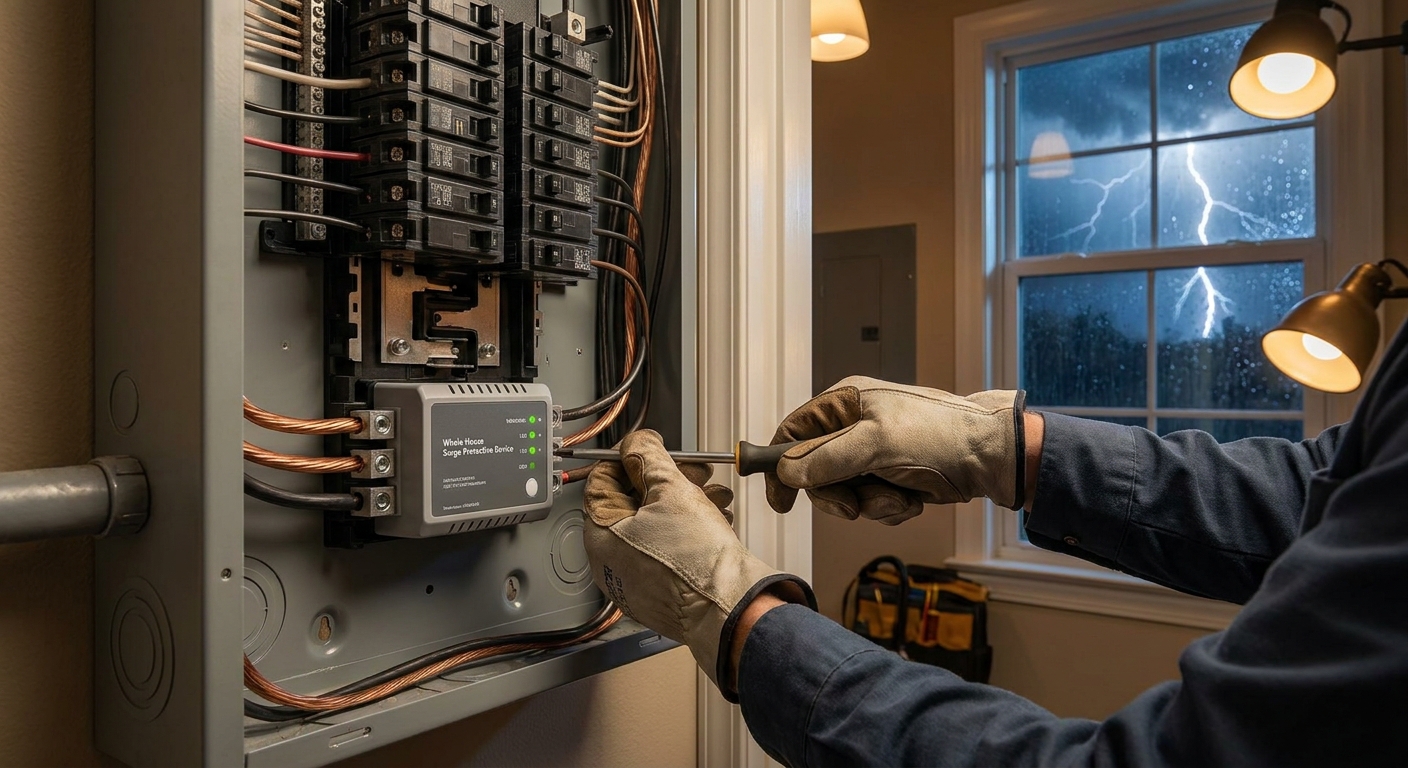
Whole-house surge protection in Tampa Bay
Whole-house surge protection can limit transient voltage before it reaches connected equipment, but device selection must match the electrical system.
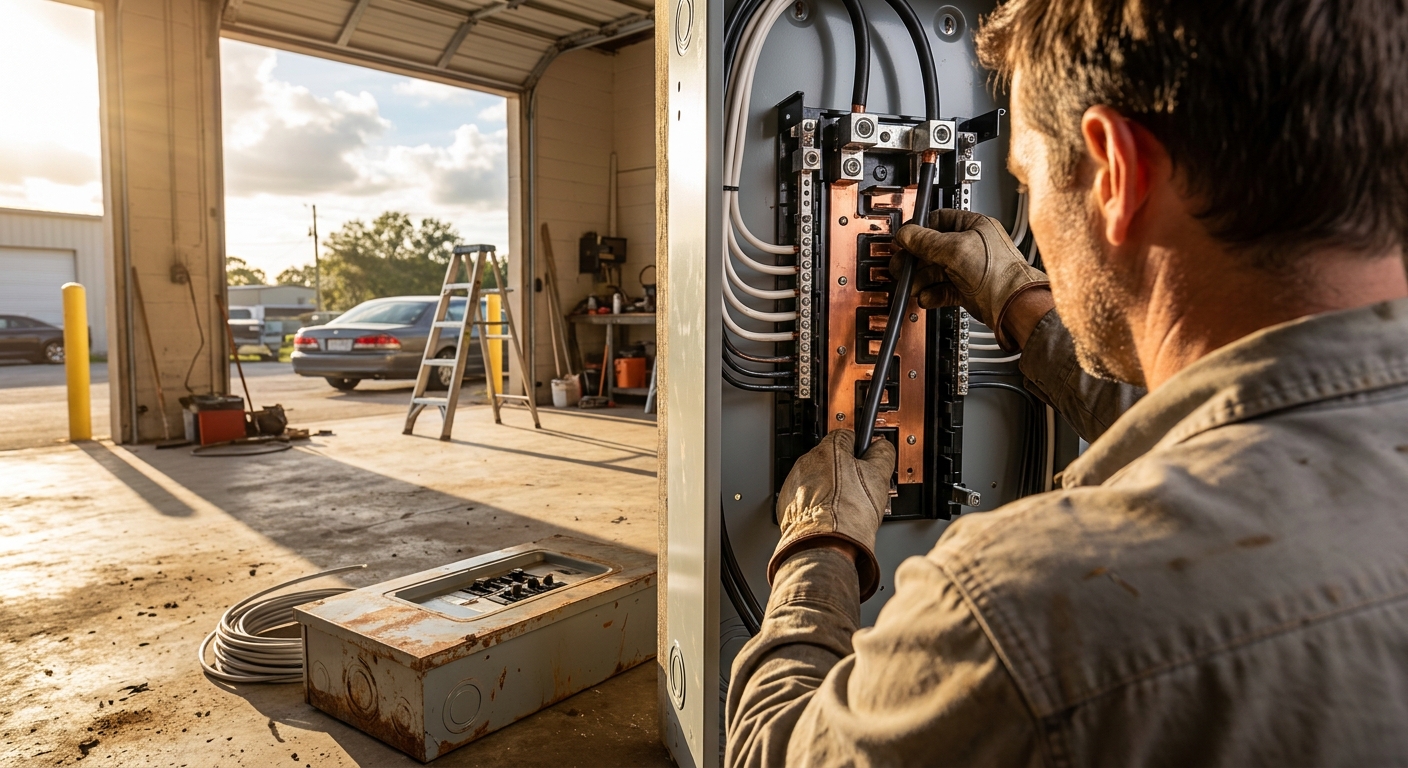
When an electrical panel needs evaluation
Panel evaluation separates service capacity, circuit space, equipment condition, and the needs of any planned electrical loads.
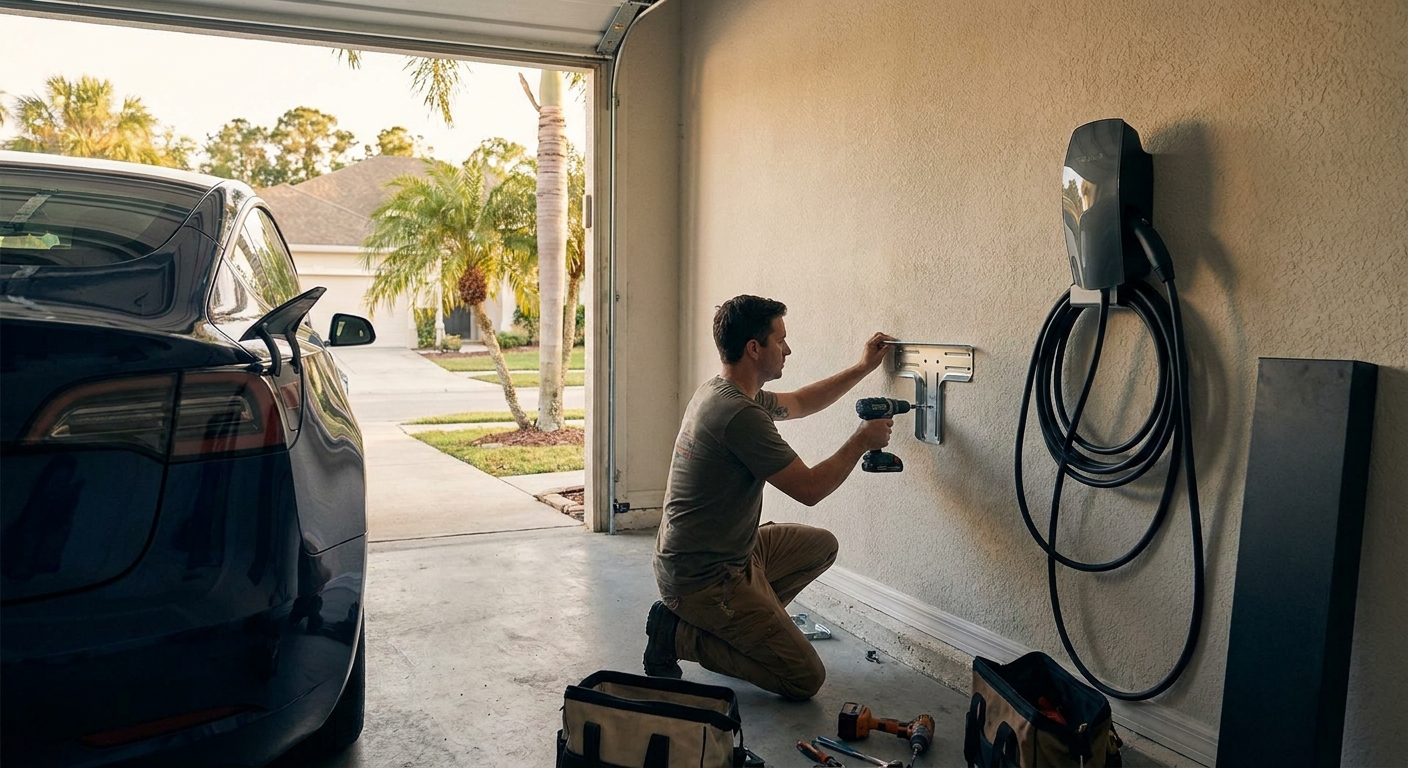
Home EV charging decisions in Tampa
The right home charging setup depends on the vehicle, daily range needs, parked time, installation location, and available electrical capacity.