Ceiling fan support and wiring
A ceiling fan needs a properly rated, securely attached box plus wiring and controls that match the selected fan and its installation instructions.
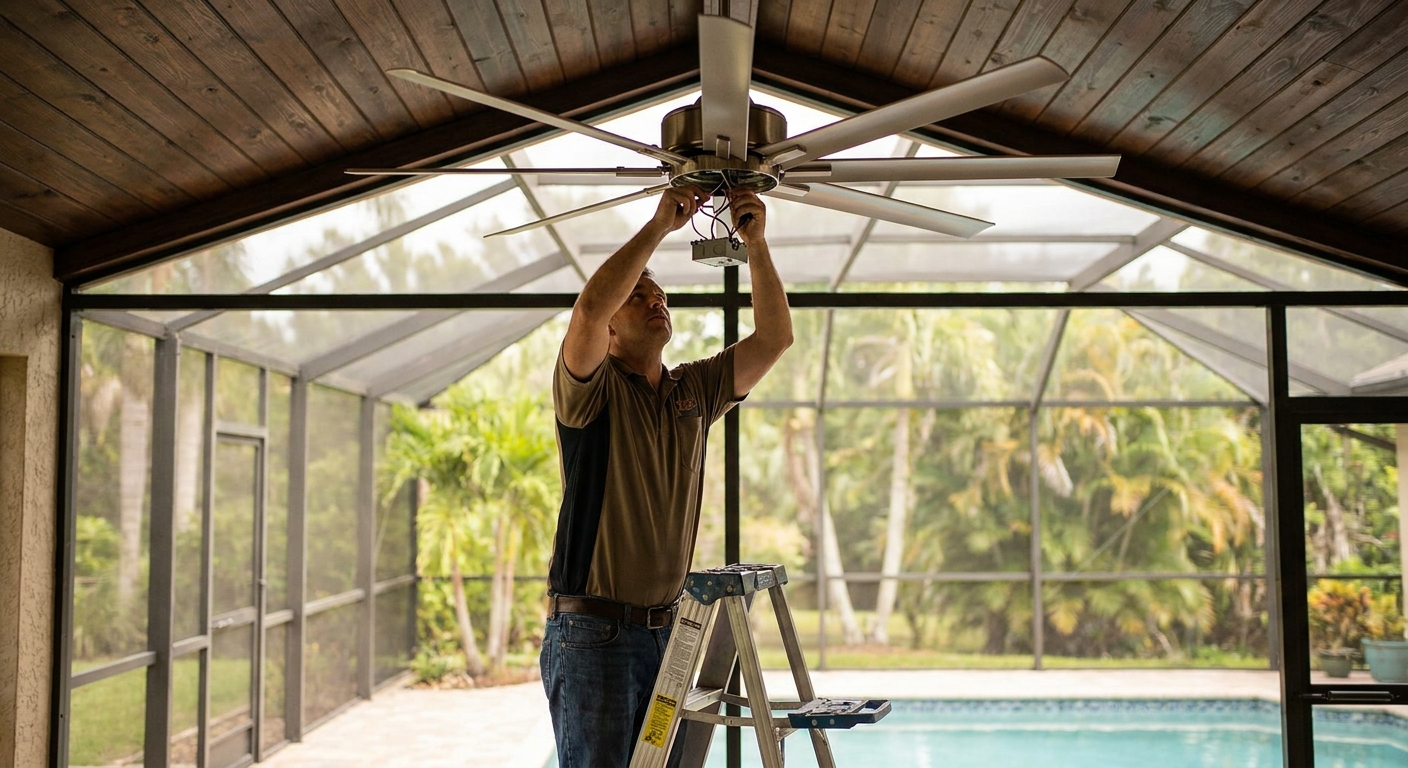
Why does the electrical box matter?
An existing light fixture doesn't establish that its box can support a ceiling fan. The box needs the appropriate fan rating and secure structural attachment. A qualified installer de-energizes the circuit, verifies it is off, checks the support, and follows the selected fan's mounting instructions.
What determines wiring and control compatibility?
A fan with a light, wall controls, a remote receiver, or smart features may not use the existing conductors and switches in the same way as the old fixture. The installer should compare the available wiring with the model instructions before mounting the fan. New wiring, ceiling access, support, controls, and the included fixture all affect the scope. This site's published range is $150 to $250 to swap a fan on existing wiring and $350 to $600 when new wiring is required. A damp-rated fan suits a protected damp location without direct water exposure. A wet-rated fan is designed for outdoor water exposure. A screened lanai is not automatically either; the building department should classify the borderline location. Cost factors are covered in ceiling fan installation cost in Tampa.
Have a licensed electrician handle the work
We refer you to independent licensed and insured electricians in Tampa Bay.
Keep reading.
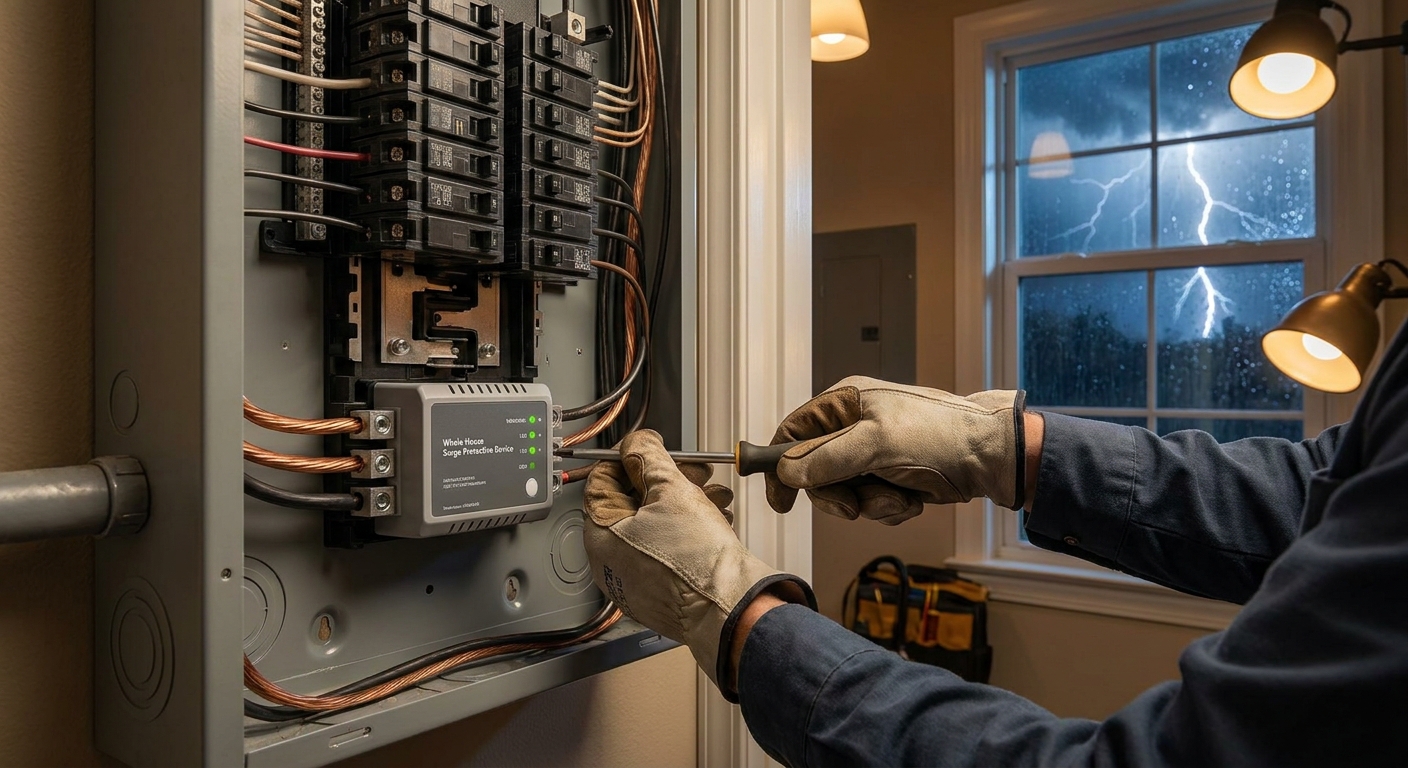
Whole-house surge protection in Tampa Bay
Whole-house surge protection can limit transient voltage before it reaches connected equipment, but device selection must match the electrical system.
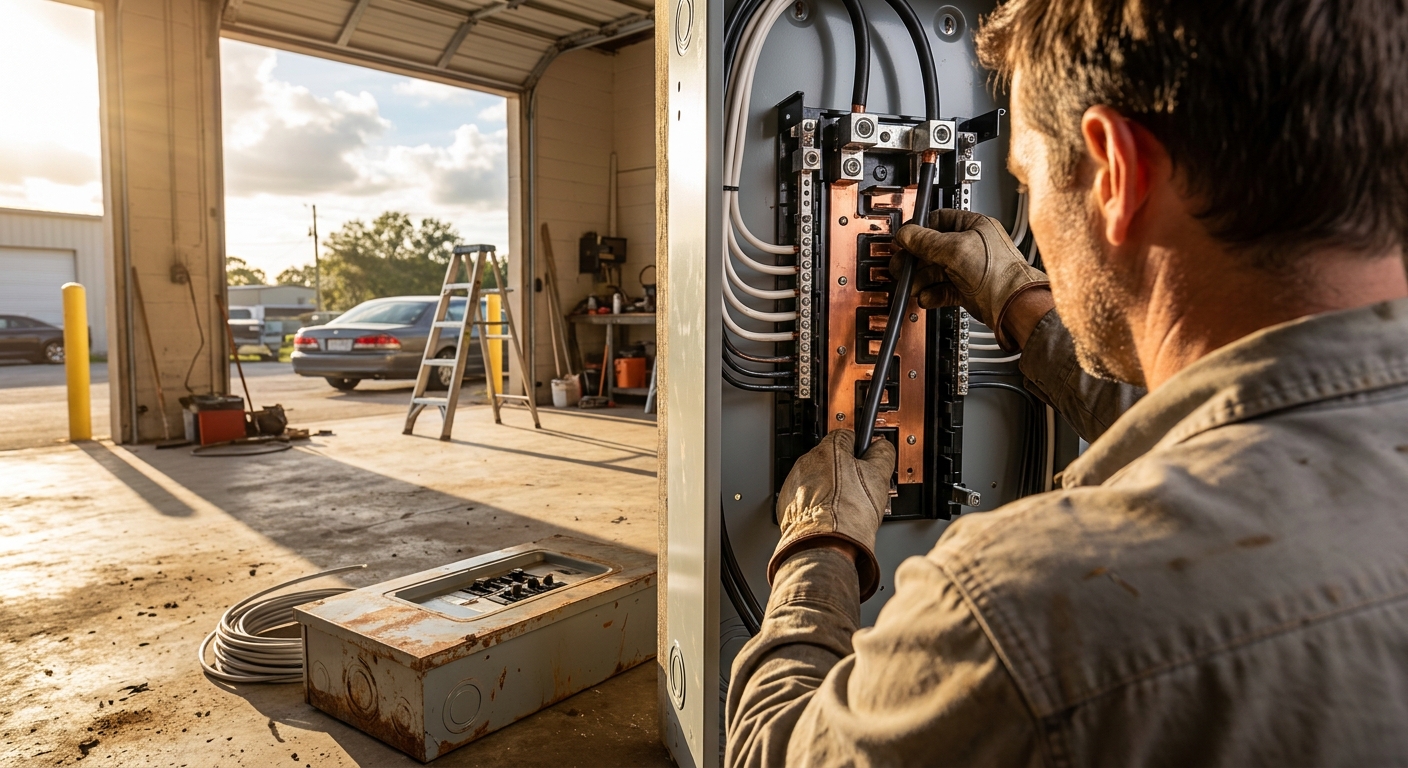
When an electrical panel needs evaluation
Panel evaluation separates service capacity, circuit space, equipment condition, and the needs of any planned electrical loads.
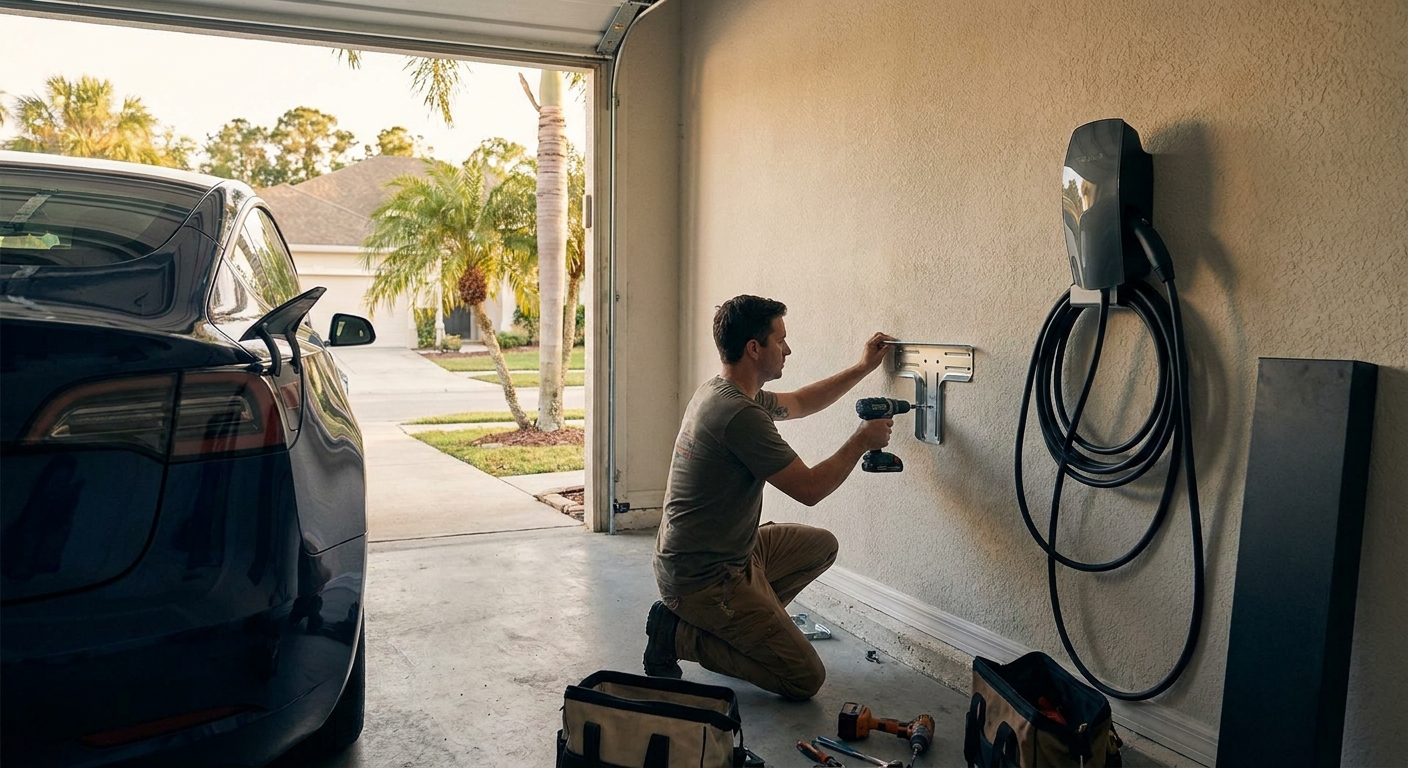
Home EV charging decisions in Tampa
The right home charging setup depends on the vehicle, daily range needs, parked time, installation location, and available electrical capacity.