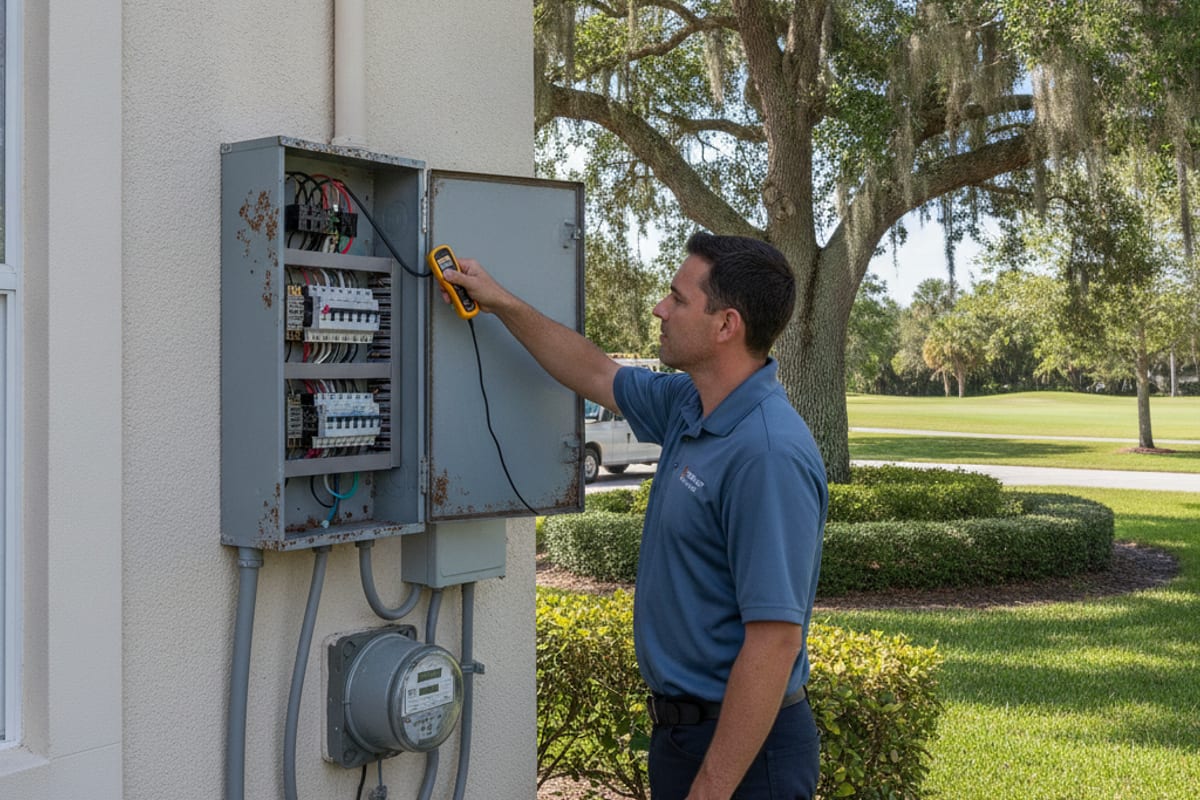
Tampa Electrical Pro connects Palm Harbor homeowners with independent licensed and insured electricians. For neighborhood-specific service, start with the Palm Harbor electrician page. The selected contractor evaluates the property, explains the available options, and determines the scope, scheduling, permits, and price.
Electrical decisions should be based on the equipment and wiring actually present, not the home’s age or neighborhood. Whether you need troubleshooting, a panel upgrade, surge protection, or help planning a new circuit, a useful assessment starts with the symptoms, existing system, intended load, and access to the work area.
Start with the condition you can observe
A dead receptacle does not identify its own cause. The issue could involve the device, a tripped protective device, a breaker, a connection elsewhere on the circuit, or loss of power upstream. A plain receptacle may also be protected by a GFCI located somewhere else, so the absence of test and reset buttons does not prove that protection is missing.
Tell the electrician which outlets, lights, or appliances are affected, when the problem began, and whether it is constant or intermittent. Do not remove a panel cover or repeatedly reset a breaker that will not stay on.
Unexplained flickering or dimming, frequent trips, buzzing or crackling, shocks, burning odors, and hot or discolored plates call for prompt inspection by a qualified electrician. These symptoms can have several causes and should not be diagnosed from a description alone. If there is smoke or fire, leave the hazard area and contact emergency services.
Panel capacity, circuit space, and new loads
An open breaker position does not prove that a panel or service can support another large load. The electrician needs to distinguish among three separate questions:
- Does the electrical service have enough capacity for the calculated loads?
- Does the panel have suitable circuit space and compatible equipment?
- Does the existing panel need replacement because of its condition or limitations?
A subpanel can provide additional circuit spaces, but it does not increase the property’s electrical service capacity. Likewise, a standby generator supplies backup power during an outage; it does not add utility capacity by itself.
Planning for an EV charger requires the vehicle, daily driving needs, parked time, charger requirements, and available electrical capacity. Level 2 charging uses 240 volts, and charging is a continuous load. Panel amperage alone does not establish that a service upgrade is required.
For other additions, such as HVAC equipment, a hot tub, workshop equipment, or a new cooking appliance, give the electrician the model information when possible. Actual equipment ratings and the existing loads are more useful than a general description.
Outdoor equipment and visible deterioration
Outdoor electrical equipment should match its actual exposure and follow its listing and installation instructions. A protected location may have different requirements from a location exposed directly to rain, irrigation, or standing water.
If you see corrosion, cracked covers, loose enclosures, water intrusion, or damaged conduit, keep clear of the equipment and arrange an inspection. Do not open wet or damaged electrical equipment. The electrician can determine whether the problem is limited to a cover or device, affects connections inside the enclosure, or calls for a broader repair.
Location alone does not establish that corrosion is present. The decision should come from the observed condition of the equipment.
Surge protection and backup power serve different purposes
Whole-home surge protection and backup generation address different problems. An electrician can inspect the service equipment, identify sensitive loads, review any protection already installed, and explain what a proposed device is designed to cover.
Generator and transfer-switch hiring for Palm Harbor is covered on the Palm Harbor generator contractors page rather than restated here. Portable generators still belong outdoors, far from the home and away from openings, and must not be connected directly to house wiring.
What if the home has aluminum wiring?
Do not assume a Palm Harbor home contains aluminum branch-circuit wiring because of its age or location. Identification requires inspection of the actual conductors and connections.
When aluminum branch wiring is present, the assessment should cover the complete connection inventory rather than one convenient receptacle. Repair options depend on the wire, devices, terminations, and equipment involved. Qualified methods can include rewiring with copper or approved connector repairs under the conditions for those systems. This branch-circuit issue should not be turned into a blanket claim that every aluminum feeder or service conductor is defective.
Choosing an electrician for the work
Florida electrical licensing is based on the contractor’s license type, scope, and authorized jurisdiction. Certified electrical contractors can work statewide, while registered contractors work within their authorized local jurisdictions. Specialty licenses have defined scopes. Verify that the business has active authority for the proposed work rather than assuming every worker must personally hold one specific EC license.
Ask for a written scope that identifies:
- What the electrician will inspect or install
- Whether the work uses an existing circuit or requires a new one
- What equipment and access are included
- Which conditions could change the scope
- Who will verify the permitting authority and handle required inspections
- What workmanship and manufacturer warranty terms apply
A Palm Harbor mailing address does not by itself settle which building authority has jurisdiction. The contractor should determine the authority from the actual property before giving a permit answer. Permit needs also depend on the work, so replacing a device should not be treated as identical to adding a circuit or changing service equipment.
What affects the cost of electrical work?
The symptom alone is not enough to price a repair. Cost can change with the diagnosis, access, existing versus new wiring, circuit route, equipment compatibility, panel condition, required shutdowns, permit or inspection needs, and whether related damage is found.
For installations, provide the equipment model, intended location, photographs of accessible areas, and any known circuit information. The electrician can then separate the base scope from possible additions instead of treating unlike projects as interchangeable.
Preparing for the appointment
Before the electrician arrives, note where the symptom occurs, what was operating at the time, whether it has happened more than once, and any recent equipment changes. Make model labels and affected areas accessible if this can be done without approaching damaged, wet, hot, or energized equipment.
During the assessment, ask the electrician to explain the observed condition, the recommended correction, available alternatives, and what would cause the scope to change. Do not approve work based solely on a guessed diagnosis from the phone description.
Frequently asked questions
Does a breaker that will not reset mean the breaker is bad?
Not necessarily. The breaker may be responding to a fault or overload, or the problem may involve the breaker or another part of the circuit. Do not keep resetting it. Leave the affected circuit alone and have a qualified electrician diagnose it.
Does an empty breaker slot mean I can add an EV charger?
No. Breaker space and service capacity are different. The electrician must evaluate the actual loads, service, panel, proposed charger, and manufacturer requirements. Level 2 charging uses 240 volts and is a continuous electrical load.
Do I need a permit for electrical work in Palm Harbor?
It depends on the work and the property’s actual jurisdiction. Ask the selected contractor to identify the responsible building authority and confirm the permit and inspection requirements for the specific scope.
How can I tell whether a receptacle has GFCI protection?
Test and reset buttons on the receptacle identify one common arrangement, but GFCI protection can also be provided upstream. An electrician can trace the circuit and determine where the protection is located and whether it operates correctly.
Can I inspect the inside of my electrical panel?
Do not remove the cover or reach inside the panel. Photograph only what is safely visible from outside. Stay away from equipment that is wet, damaged, hot, arcing, or producing an odor.
Get connected with a Palm Harbor electrician
Call Tampa Electrical Pro at (813) 850-0320 to be connected with an independent licensed and insured electrician serving Palm Harbor. The contractor will evaluate the property and provide the project-specific scope, scheduling, permit information, and price.