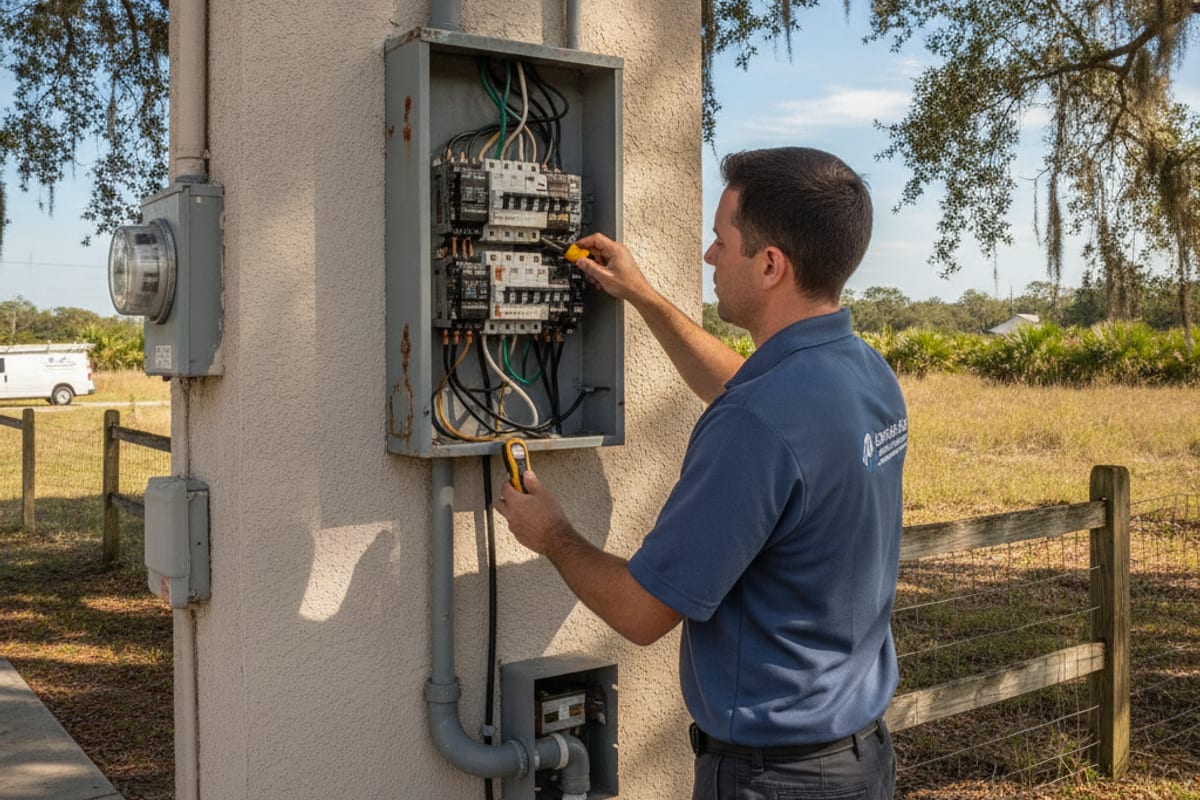
Electrical work in a Hudson home should begin with the actual equipment, symptoms, and planned loads, not assumptions based on the neighborhood or the home’s age. Tampa Electrical Pro connects Hudson customers with independent licensed and insured electricians for troubleshooting, repairs, new circuits, panel evaluations, and installations.
The right scope depends on what the electrician finds at the property. Useful details include which rooms or devices are affected, whether a problem is constant or intermittent, what equipment is being added, and whether wiring or equipment will be exposed to damp or wet conditions.
Common projects include panel upgrades, surge protection, outdoor electrical work, dedicated circuits, and backup-power planning. The selected contractor determines the diagnosis, scheduling, permits, workmanship, and price.
Electrical conditions that deserve attention
A dead receptacle doesn’t identify its own cause. It could involve an upstream GFCI device, a tripped breaker, a failed receptacle, damaged wiring, or another fault. Note which outlets and fixtures are affected, but don’t remove panel covers or open electrical equipment to investigate.
Unexplained flickering or dimming, hot or discolored wall plates, buzzing or crackling, a burning odor, shocks, and breakers that trip repeatedly call for prompt inspection by a qualified electrician. These symptoms can have more than one cause, so a generic description can’t safely identify the failed component.
If there is smoke or fire, leave the hazard area and contact emergency services. Don’t approach a wet or visibly damaged panel, and don’t keep resetting a breaker that trips again.
Outdoor receptacles, covers, boxes, fixtures, and connections should be evaluated according to their actual exposure. Cracked covers, loose equipment, water intrusion, discoloration, or visible corrosion are reasons to arrange an inspection. Equipment also needs to be listed for the location where it will be installed. A protected damp location and a location exposed directly to rain or water are not the same installation condition.
Panel space and service capacity are different questions
A panel can run out of breaker positions without the electrical service being at its load limit. A subpanel may add circuit space, but it doesn’t increase the capacity supplied by the utility. Conversely, open breaker positions don’t prove that enough capacity is available for a new large load.
Before recommending a panel upgrade, an electrician can review the service rating, panel condition, existing loads, planned equipment, circuit requirements, and available space. A load calculation is especially important when planning a substantial new electrical load.
The age of a home or panel doesn’t settle the decision by itself. Condition, labeling, compatibility, observed damage, and the proposed work all matter. The useful question is whether the existing system can safely support the project, not whether a particular amperage is automatically too small.
A standby generator also shouldn’t be counted as though it were another utility-powered appliance. It supplies selected loads during an outage. The design still needs properly installed transfer equipment that isolates the home from utility power, along with a defined essential-load plan.
Surge and backup-power planning
Surge protection and backup power solve different problems. A surge protective device addresses transient overvoltage. It doesn’t keep appliances running during an outage. A generator supplies power during an outage, but it isn’t a permanent answer to every interruption and doesn’t eliminate fuel, maintenance, exhaust, fire, or electrical hazards.
Portable generators may power individual appliances through properly rated outdoor cords. They must remain outdoors, far from the house and away from openings. A portable generator must never be operated inside a home, garage, crawlspace, basement, or shed.
Connecting a generator to house wiring requires proper transfer isolation. Turning off the main breaker isn’t sufficient protection against backfeeding. Fixed whole-home generator equipment should be professionally installed according to the listed equipment instructions and the property’s applicable review requirements.
When comparing backup-power options, identify the loads that truly need power, the available fuel, equipment location, exhaust considerations, maintenance needs, and how the transfer system will operate. That produces a more useful plan than choosing equipment from the home’s size alone.
GFCI, AFCI, and breaker protection
Overcurrent protection, GFCI protection, and AFCI protection perform different jobs. A standard breaker primarily responds to overcurrent. GFCI protection addresses shock hazards from current leaving its intended path. AFCI protection addresses certain arcing conditions.
A receptacle without test and reset buttons may still receive GFCI protection from a device upstream on the same circuit. That means appearance alone can’t confirm whether a particular outlet is protected. An electrician can trace the circuit and test the protective devices according to their instructions.
If a GFCI device or breaker won’t reset, or it trips again after the connected equipment has been removed from use, stop there and arrange qualified troubleshooting. Repeated resets don’t repair the underlying fault.
Hudson Beach, well-pump circuits, and aging-in-place controls
The local questions for a Hudson property are on the Hudson electrician page. Near Hudson Beach and the canal streets, outdoor equipment should be evaluated according to its actual exposure, listing, and visible condition. Salt, moisture, or flooding concerns do not establish that equipment has failed, but corrosion, heat, discoloration, or damaged enclosures deserve qualified inspection. Never approach electrical equipment that is wet or visibly damaged.
If the home is on well water, the electrical scope is the well-pump circuit and related controls, not the pump itself. Share the pump label, symptom location, and whether the problem is constant or intermittent. If the property also has septic equipment, identify each affected circuit so the contractor can separate the systems during diagnosis.
For aging-in-place work, the useful questions are practical: where lighting is insufficient, which controls are difficult to reach, and what equipment needs dependable power. Backup planning should identify essential loads, available fuel, and safe transfer isolation. Confirm any medical-need program with the utility that actually serves the address.
Choosing an electrician for Hudson work
Florida electrical licensing isn’t limited to one universal EC category. Certified electrical contractors may work statewide, registered contractors work within authorized local jurisdictions, and specialty licenses have defined scopes. Verify that the business has active credentials appropriate for the work and jurisdiction.
Permit requirements depend on the project and the authority responsible for the property. Ask the contractor to identify the jurisdiction, explain whether the planned scope requires a permit or inspection, and state who will handle each step. A mailing address alone doesn’t answer every jurisdiction question.
Before authorizing work, request a written scope that identifies:
- The observed problem or proposed installation
- What testing or load evaluation is included
- Whether new wiring, access, equipment, or utility coordination is involved
- Who is responsible for permits and inspections when required
- What equipment and labor are included
- How changes discovered during the work will be approved
- The contractor’s workmanship terms and applicable manufacturer coverage
These questions make competing proposals easier to compare without relying on unsupported price or timing promises.
What to share when requesting service
Give the electrician a concise description of what you can safely observe. For troubleshooting, note where the symptom occurs, what was operating at the time, whether it has happened more than once, and whether there is heat, discoloration, sound, odor, water, or visible damage.
For planned work, provide the equipment label or model when available, its proposed location, whether the circuit already exists, and any known access constraints. For outdoor work, explain whether the location is sheltered, damp, or exposed directly to water. For a generator, list the loads you want available during an outage rather than asking for an undefined whole-house solution.
Don’t open a panel, remove covers, touch damaged components, or perform live testing to collect this information. The electrician can inspect and test the system with the appropriate procedures and equipment.
FAQ about Hudson electricians
How much does electrical work cost in Hudson?
The page doesn’t have a verified local price range. Scope can change based on diagnosis, circuit routing, access, equipment condition, utility coordination, permitting, and whether the work is a direct replacement or a new installation. A written proposal should state what is included and how additional work would be approved.
How long will the work take?
Timing depends on the diagnosis and scope. A direct replacement with suitable existing wiring differs from troubleshooting an intermittent fault, routing a new circuit, coordinating utility isolation, or completing work that requires review. The selected contractor can provide a schedule after evaluating the project.
Does every electrical job require a permit?
No universal every-job answer is supported here. Requirements vary with the work and the authority responsible for the property. The contractor should identify the jurisdiction and confirm the requirements for the specific scope.
Does a full panel mean the electrical service needs an upgrade?
Not automatically. Full breaker positions concern circuit space, while service capacity concerns the load the service can supply. A subpanel can create more circuit positions but doesn’t add service capacity. The electrician should review both questions separately.
Can a standby generator force a service upgrade?
A generator supplies backup power and doesn’t add utility load by itself. Its installation still requires compatible transfer equipment, isolation from the utility, an essential-load plan, and evaluation of the existing electrical equipment.
Can I perform the troubleshooting myself?
You can report safely observable details and follow the labeled instructions for accessible protective devices. Don’t remove covers, work inside a panel, approach wet or damaged equipment, or keep resetting a recurring fault. Qualified electrical work should be handled by an appropriately licensed contractor.
Get connected with a Hudson electrician
Call Tampa Electrical Pro at (813) 850-0320 to be connected with an independent licensed and insured electrician serving Hudson. The selected contractor will evaluate the property, explain the available options, and determine the scope, permits, schedule, and price.