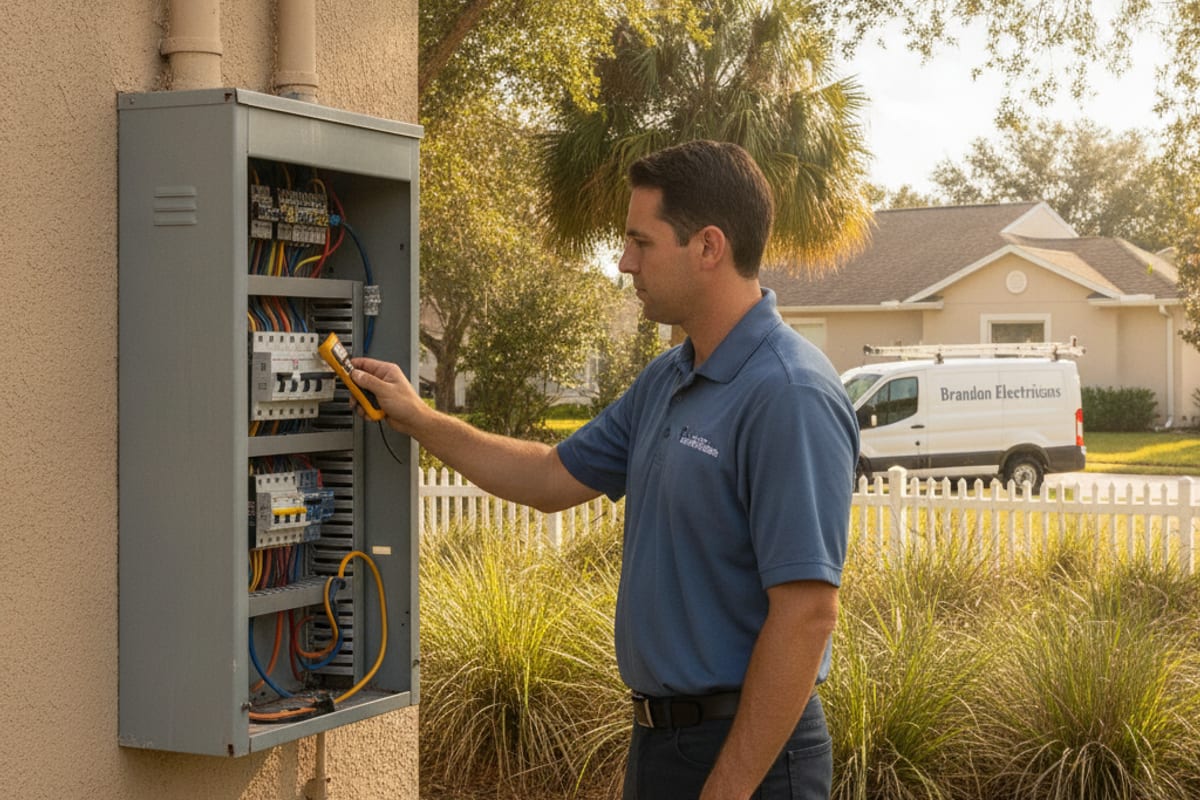
Electrical work in Brandon should start with the conditions at the property, not assumptions about its age, neighborhood, or panel label. The useful questions are what stopped working, where the symptom appears, whether it recurs, what equipment is connected, and whether the project changes the wiring or electrical load.
Tampa Electrical Pro connects customers with independent licensed and insured electricians. The selected contractor diagnoses the system, determines the work, and explains scheduling, permits, workmanship terms, and price. Whether you need troubleshooting, a panel upgrade, or another electrical repair or installation, describe the symptoms and the change you want to make as clearly as possible.
When an electrical symptom needs prompt attention
A burning odor, buzzing or crackling, shocks, hot or discolored plates, unexplained flickering, or breakers that trip frequently calls for prompt inspection by a qualified electrician. These symptoms have several possible causes, and a generic description can’t identify the fault safely.
If there is smoke or fire, leave the hazard area and contact emergency services. Don’t open electrical equipment, remove panel covers, touch wet or damaged equipment, or keep resetting a breaker that trips again.
A single dead receptacle could involve the receptacle itself, an upstream GFCI device, a breaker, or another connection on the circuit. A plain receptacle without test and reset buttons may still have GFCI protection upstream. A room or group of receptacles losing power also requires diagnosis rather than an assumed breaker replacement.
Widespread flickering or dimming can involve a branch circuit, service equipment, connected loads, or the utility supply. It shouldn’t be dismissed as harmless or diagnosed from the timing alone. An electrician can inspect the customer-owned equipment and determine whether utility coordination is also appropriate.
Repair diagnosis and installation are different tasks
Troubleshooting begins with symptoms. Tell the electrician which rooms or devices are affected, whether the problem is constant or intermittent, what was operating when it happened, and whether any recent work preceded it. That information helps define the inspection without pretending to diagnose the problem over the phone.
An installation request begins with the proposed equipment and the existing electrical system. Useful details include the equipment label or model, whether a new or existing circuit will be used, the wiring route, available access, indoor or outdoor exposure, and any control or mounting requirements.
The initial visit may be diagnostic rather than the repair itself. A written scope should distinguish inspection from installation and identify included work, exclusions, equipment, permit responsibility, and any workmanship or manufacturer warranty that actually applies.
What a panel change can and can’t solve
Service capacity, breaker space, and panel condition are separate issues. A panel can be full even when the service has usable capacity. A subpanel may create circuit space, but it doesn’t increase the electrical service capacity. An older or damaged panel may need replacement for reasons unrelated to adding load.
A panel upgrade should follow an evaluation of the existing service, actual loads, planned equipment, panel condition, and available circuit space. Panel amperage by itself doesn’t prove that an EV charger or another large circuit requires a service upgrade. The electrician evaluates electrical capacity and the equipment requirements before recommending a solution.
A standby generator is a backup supply, not an added utility load by itself. Its design instead depends on the loads selected for backup, the equipment, fuel planning, and safe transfer isolation from the utility. Adding a generator therefore doesn’t automatically justify a larger electrical service.
Permits and the correct authority
Permit requirements depend on the work and the authority serving the property. For work under Hillsborough County’s jurisdiction, the county’s exempt-work guidance does not exempt the alteration, replacement, or relocation of electrical wiring systems, apart from a limited low-voltage exception. A new branch circuit is not low-voltage work.
That doesn’t make one blanket answer correct for every device replacement or every address. Before work begins, confirm the property’s jurisdiction, whether the specific scope requires a permit, who will submit it, and which inspections apply. Scheduling and approval depend on the actual project and permitting authority.
Surge protection and backup power solve different problems
Whole-home surge protection and backup power aren’t interchangeable. Surge protection addresses voltage surges. A whole-home generator supplies selected loads during an outage, subject to the system design and available fuel.
Fixed standby equipment is professionally installed with transfer equipment that isolates it from the utility. A portable generator can supply individual appliances through properly rated outdoor cords, but it must never be connected directly to house wiring without approved transfer equipment. Portable fuel-burning generators belong outdoors, far from the house and away from openings. A garage, basement, crawlspace, home, or shed is not a safe operating location.
Before planning backup power, identify the loads that truly need power and review their starting and running requirements with the electrician. Backup planning should also address fuel, maintenance, exhaust, and the installation instructions for the selected equipment.
GFCI protection and outdoor equipment
GFCI protection reduces shock risk, while overcurrent protection and arc-fault protection perform different jobs. The absence of test and reset buttons on one receptacle doesn’t establish that a circuit lacks GFCI protection because protection may be provided upstream.
For outdoor work, the product rating and actual exposure matter. Equipment in a damp protected location and equipment exposed directly to water may require different listings. The electrician should inspect the circuit, protective devices, enclosure, and installation conditions rather than relying only on the room or patio name.
If aluminum wiring is present
A property’s location or age doesn’t establish that it has aluminum branch-circuit wiring. Identification requires inspection of the actual conductors and connections.
When aluminum branch wiring is confirmed, the assessment should cover the complete connection inventory. Depending on the wiring and equipment, recognized remediation can include rewiring with copper or approved connector methods such as COPALUM or AlumiConn under their specified conditions. This branch-circuit issue should not be turned into a blanket claim that every aluminum feeder or service conductor must be replaced.
How to evaluate an electrician for the work
Florida licensing has more than one lawful category. Certified electrical contractors can work statewide, registered contractors work within their authorized local jurisdictions, and specialty licenses have defined limits. Verify the business’s active status, license scope, and authority for the location and proposed work rather than insisting that every person on a job hold one particular EC category.
Ask for a written scope that answers practical questions:
- Is this visit for diagnosis, repair, installation, or a combination?
- What existing conditions could change the scope?
- Will the work use an existing circuit or require a new one?
- Who determines and handles any required permit or inspection?
- Which equipment and materials are included?
- What warranty, if any, applies to labor and equipment?
- How will changes be approved before additional work begins?
For commercial work, also describe the equipment served, operating requirements, access restrictions, and any planned downtime. Contractors have different scopes and availability, so those details belong in the initial conversation.
Questions Brandon customers often ask
How much will an electrical repair cost?
The symptom alone isn’t enough to price the repair. Cost can change with diagnostic time, access, damaged components, the wiring route, equipment requirements, permit or inspection needs, and whether utility coordination is involved. Ask for a written scope after the relevant conditions have been inspected.
How long will the work take?
A contractor can estimate timing after identifying the fault or reviewing the installation. Access, equipment availability, concealed damage, permits, inspections, and utility work can all affect the schedule. An advertised arrival window isn’t the same as a verified completion time.
Does a new receptacle require a permit?
A new receptacle on a new branch circuit is different from replacing an existing device. For property under Hillsborough County jurisdiction, new branch-circuit wiring isn’t covered by the county’s limited low-voltage exemption. Confirm the exact scope and authority before work begins.
Does a full panel mean the service must be upgraded?
No. Full breaker spaces establish a space issue, not the amount of unused service capacity. A load evaluation and inspection determine whether the suitable answer is circuit reconfiguration, a subpanel, equipment replacement, load management, or a service upgrade.
Can a generator be connected through a household receptacle?
No. Directly backfeeding house wiring is unsafe. Portable generators may power individual appliances through properly rated outdoor cords. Connecting any generator to house wiring requires professionally installed transfer isolation from the utility.
Get connected with electrical help in Brandon
Call Tampa Electrical Pro at (813) 850-0320. We’ll connect you with an independent licensed and insured electrician who can evaluate the Brandon property and explain the available next steps. The selected contractor determines availability, scope, permits, price, and workmanship terms.